
Hi! We are Biggi & Flo
We are two adventurous travelers who are drawn to faraway places. On our travel blog, written with a lot of heart and soul, you will find exciting tips and reports on the topics of travel, outdoor and photography.
Advertising notice: All links marked with * are affiliate links. If you order something via this link, we receive a small commission - nothing changes in the price.
Not for nothing is the area also called the Danish Riviera. But Odsherred has also contributed to cultural enrichment. In the 19th century, the landscape of the Geopark was the basis of the romantic idea of nature for the painters of the Golden Age of Danish art. Today, the Odsherred painters are among the most important artist colonies in Denmark. They mostly painted the landscape in a quite modern way.
For me, Odsherred was a place to slow down, to enjoy, to clear my head. When the wind roars around your ears on the east coast and the taste of salt water sticks to your lips. When the lights go on in the houses and you make yourself comfortable with a hot chocolate.
Hygge is the word the Danes live by. Making yourself nice inside when it gets uncomfortable outside. To be honest, the word has a broader meaning for me: I feel hygge when I stand on the beach, take in the unique atmosphere that only Denmark offers, and feel refreshed from one moment to the next.
This country speaks to me. Every time I arrive there. Endless walks on the beach, flying kites in the wind and then snuggling back under the warm blanket while the wind howls around the house outside. That's Denmark for me. If you love the country and the seaside atmosphere as much as I do, then you will simply love the Odsherred area. Here you can find the most beautiful sights in Denmark.
The top sights of Odsherred Geopark on the Danish Riviera
Around 160 kilometres of coastline hug the entire area of Geopark Odsherred. No wonder, then, that visitors are offered dream locations here. The area is also called the Danish Riviera. An hour's drive from Copenhagen, a beautiful landscape opens up for the visitor. The Odsherred Geopark is a destination for the whole family. Young and old alike can do as much as they like here. For the little ones, there are many outdoor activities and adventure parks, as well as the Geokids. And the adults can simply enjoy the landscape, let the wind blow around their ears, discover the culture or indulge in culinary delights. In total, the Geopark offers 25 different hiking routes that form a network of paths 300 kilometres long.
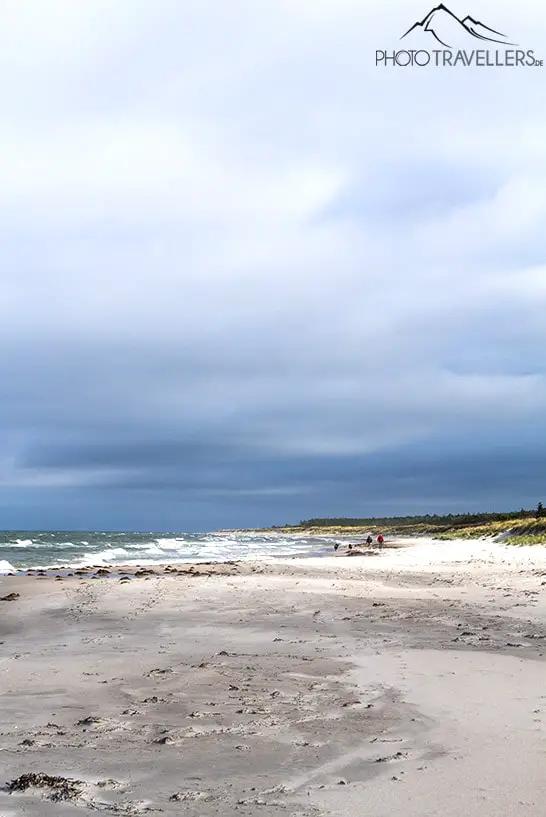
The beaches in the Odsherred Geopark are simply beautiful The Ridgeway Hiking Trail
The so-called Höhenrückenwanderweg, or HøjderyGstien in Danish, is a cultural and scenic highlight of the Odsherred Geopark. It stretches over three hills on the Hove ridge. These geological formations are of unique composition and were formed 17,000 years ago. The ridge walk starts, for example, at the so-called shelter place with the Geokids in Veddinge. In Denmark, the little ones learn to appreciate nature from the very beginning. So they were allowed to become part of nature and set up self-made masks in the area. The hill used to be a rubbish dump. Now it has become an attraction. There are also cute, open huts where people can sleep. There are also fireplaces. From here you can hike on to the next three hills, Esterhøj, Maglehøj and Dutterhøje.
The hill Esterhøj used to serve as a motif and inspiration for artists and painters in the region, such as Ole Kielberg. The mound is about 90 metres high (and thus one of the highest points in the region) and is a burial mound from the Bronze Age. Next to the burial mound is also the memorial stone to the reunification of Denmark with Sønderjylland. If you are interested in this part of history, feel free to read my article on Danish history. Right next to the hill is the burial mound of the Danish filmmaker Ole Olsen. He himself grew up in poverty and then became a rich businessman with his company Nordisk Film.
From Esterhøj hill, you walk along the road to later come back to green nature. You will reach Maglehøj. Here you will find burial mounds from the Bronze Age and a so-called dolmen, a giant tomb.
The rows of mounds in Dutterhøje are burial mounds from the Bronze Age. At that time it was common to build the tumuli in a row. You can see this quite well in Dutterhøje. You can walk up a couple of mounds here and enjoy the great view from the top.
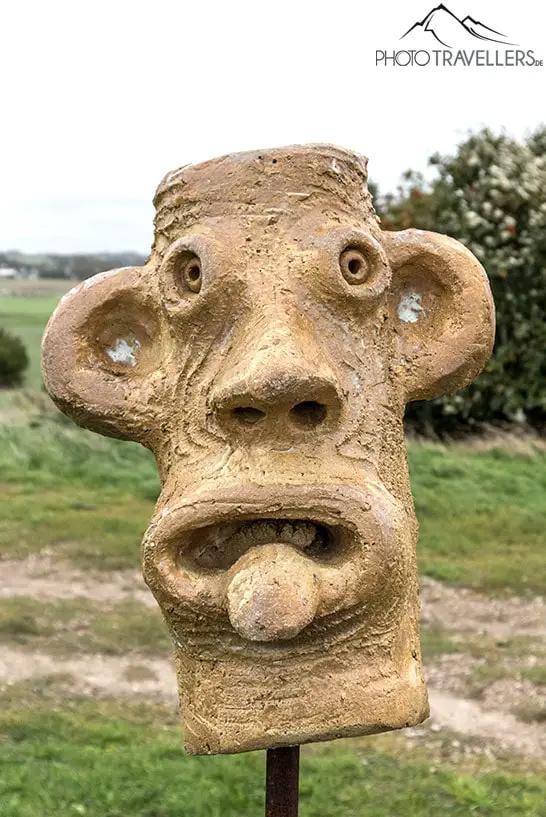
A mask of the Geokids in Geopark Odsherred 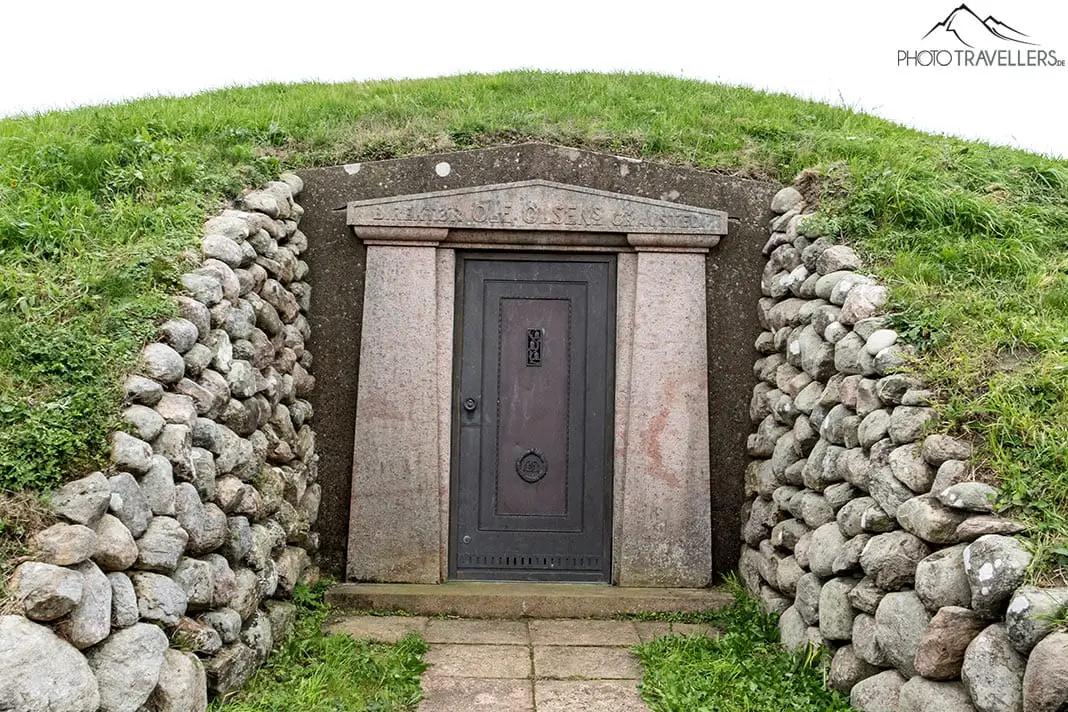 In this burial chamber lies Ole Olsen, a well-known filmmaker.
 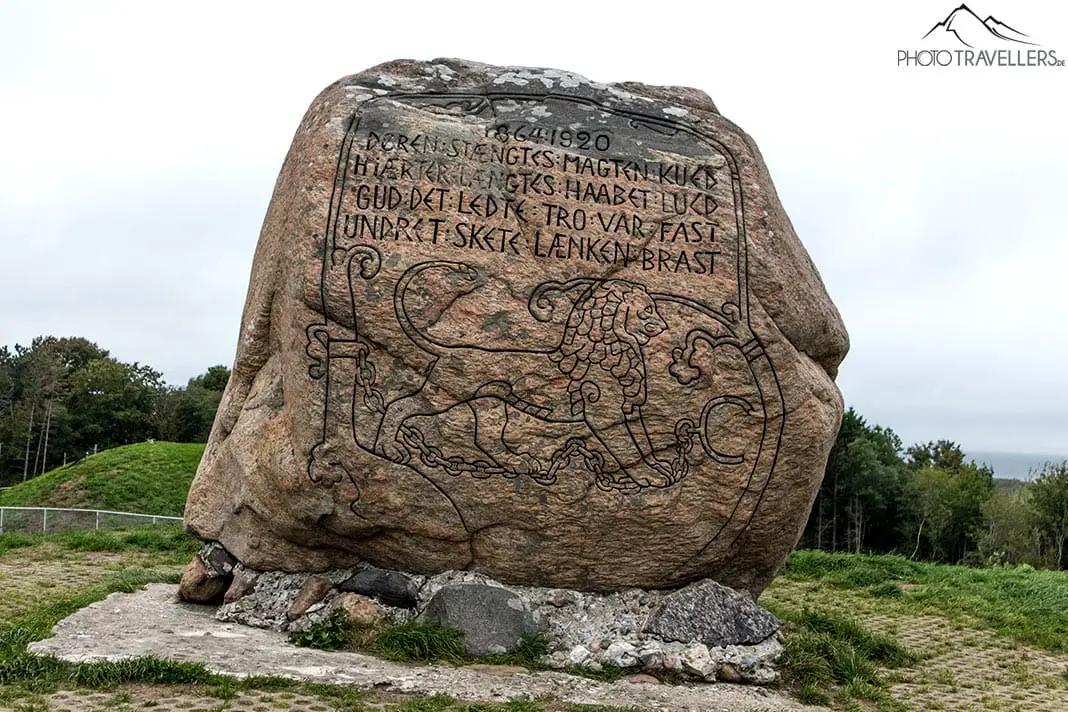 This stone was placed here as a monument to the reclamation of Sonderjylland.
 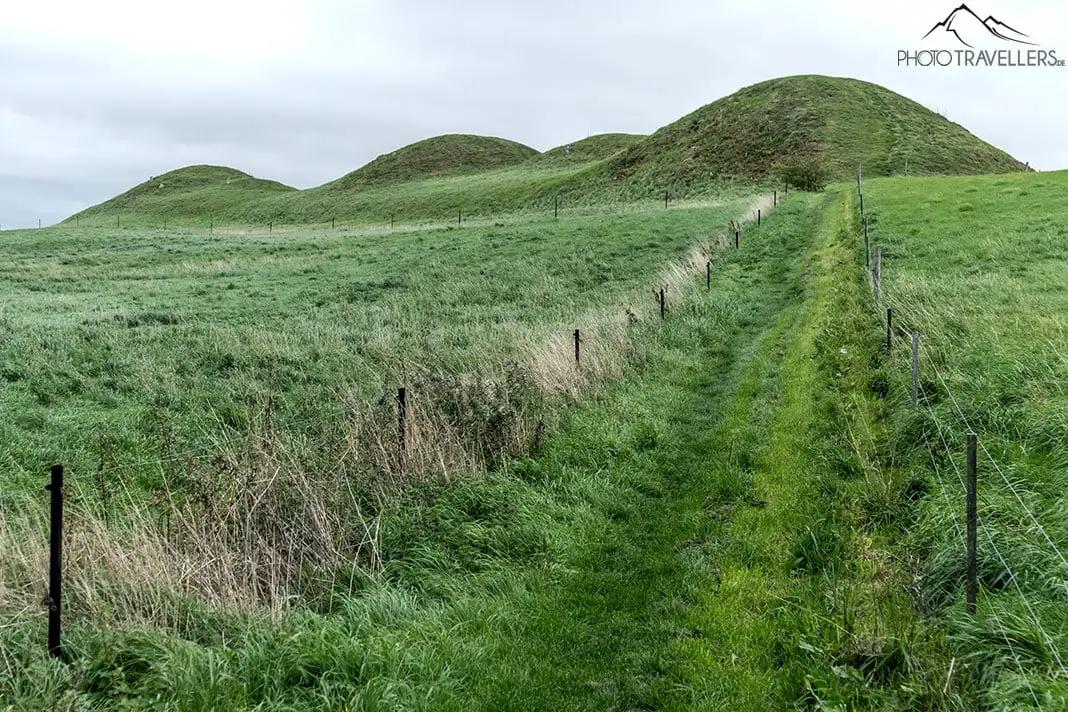 The burial mounds at Dutterhoje date from the Bronze Age.
 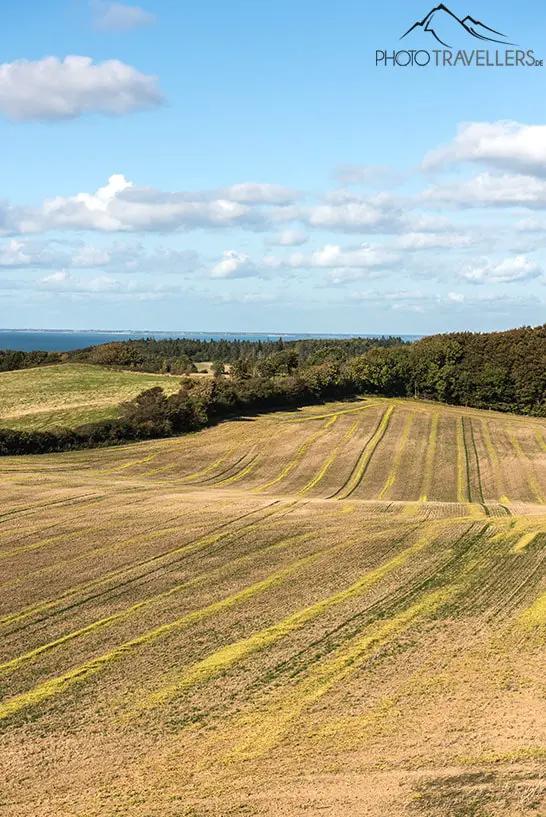 On the ridge walk you have a beautiful view over the fields. Bicycle tour through the sandy fly plantations in Rørvig
Here I advise you to take the bike and explore the entire area. Of course, you can also slow down and walk along the beach for hours. As the name suggests, the sand plant ations consist of a lot of sand. The dune landscape and a beautiful beach stretch forever and completely to and around the north-eastern tip of Odsherred. We had the beach to ourselves. In the high season, the dunes will probably be swarming with sun worshippers. If you have had enough of walking along the beach, you can also take long walks in the forest right next to the dunes.
The background to the plantation was that in the 1860s the large drift sand area was planted to protect the region from sand drift. Initially, pine trees were able to settle here. Now larch, spruce and oak also grow.
We cycled around the entire tip of the north-western tip and discovered many great beaches. All the beaches in the area are white and have fine sand.
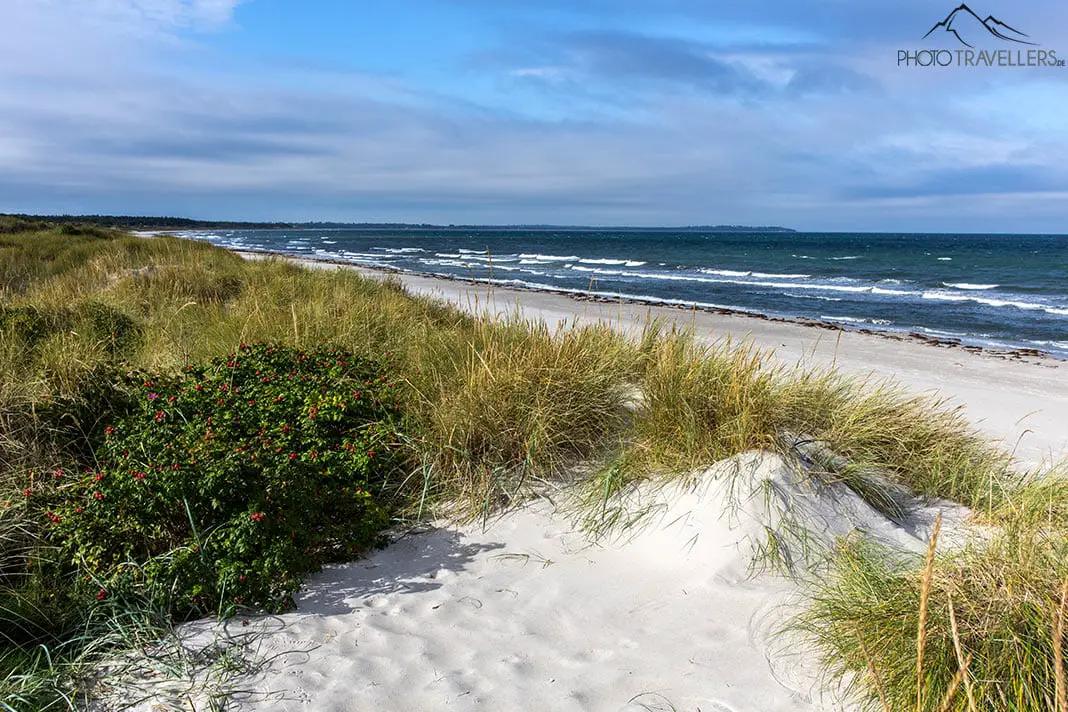
You can walk endlessly in the dunes of the sand flight plantations. 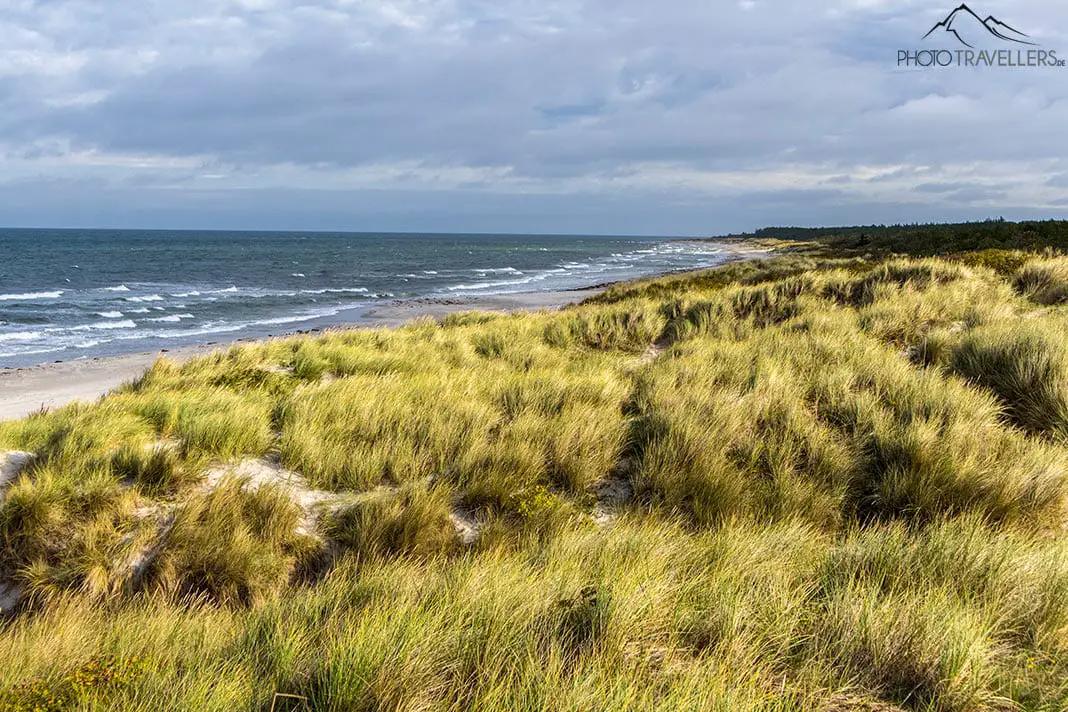 Have you also got the urge to go to the Baltic Sea?
 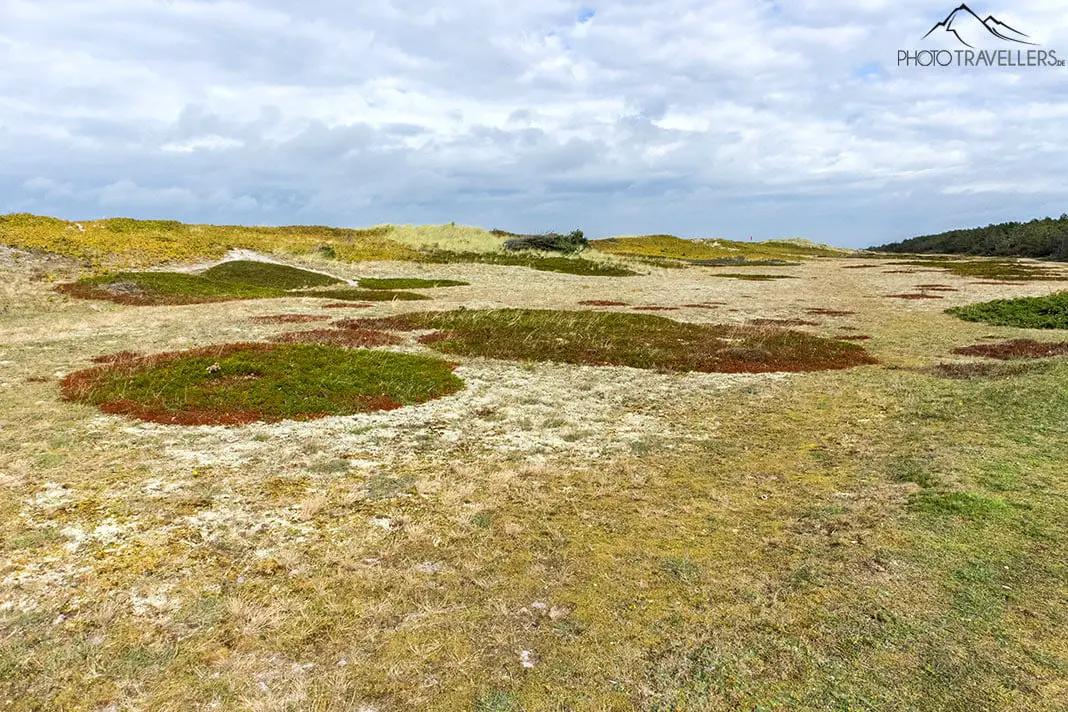 In autumn, the landscape turns beautifully colourful.
 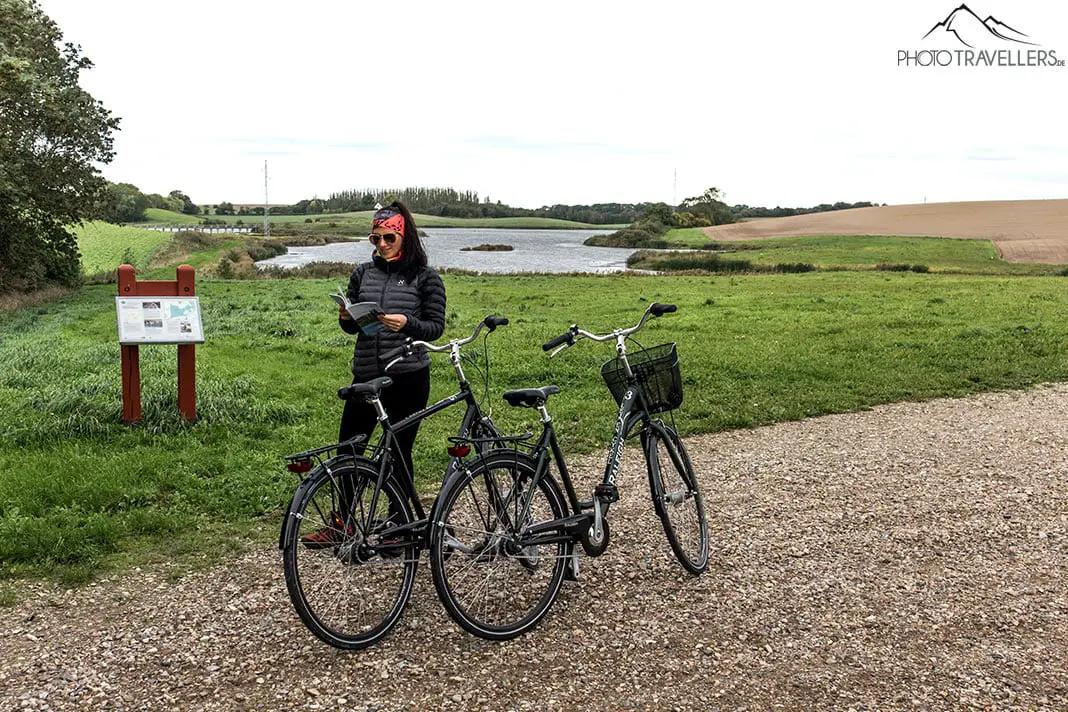 The walking book about Geopark Odsherred was always with us on our trip. The Klintebjerg
Odsherred's highest point is Klintebjerg. From the village of Klint, turn right towards the harbour. Here the landscape changes. On the beach there are now pebbles or larger stones that are grained like marble. In this area you can walk along the beach for a long time and then even come to an old lime quarry.
However, we did not manage to do that. The area is also very popular for fishing. Of course, we did not miss the opportunity to walk around Klintebjerg. The view from up here is definitely spectacular.
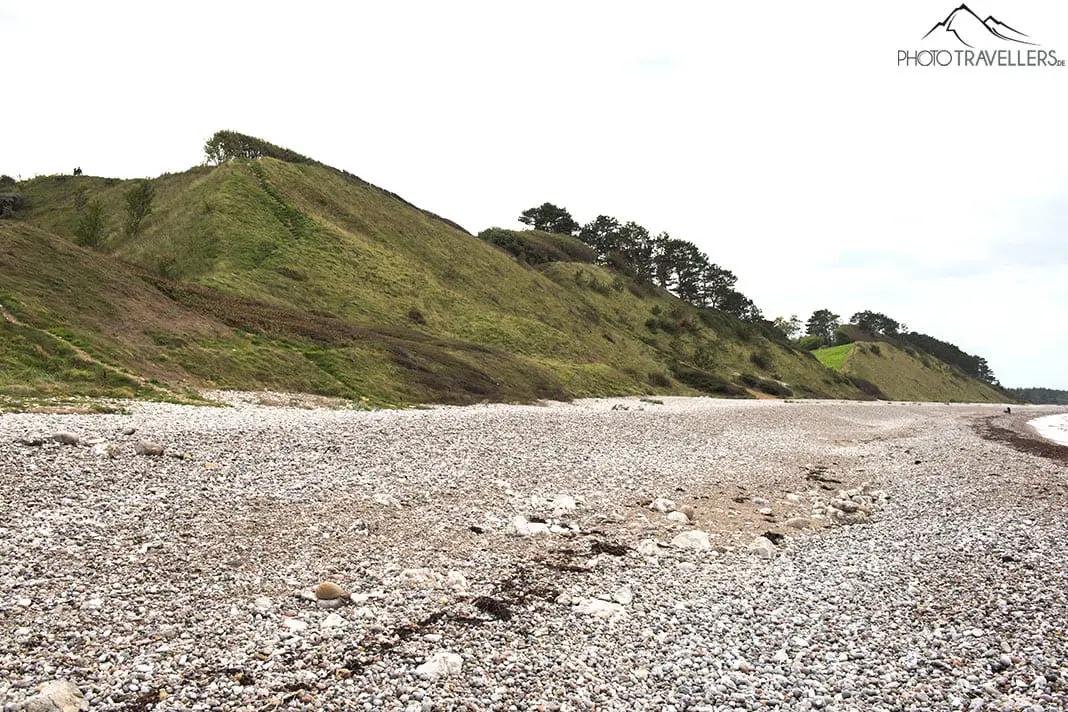
Klintebjerg is the highest point in Odherred. 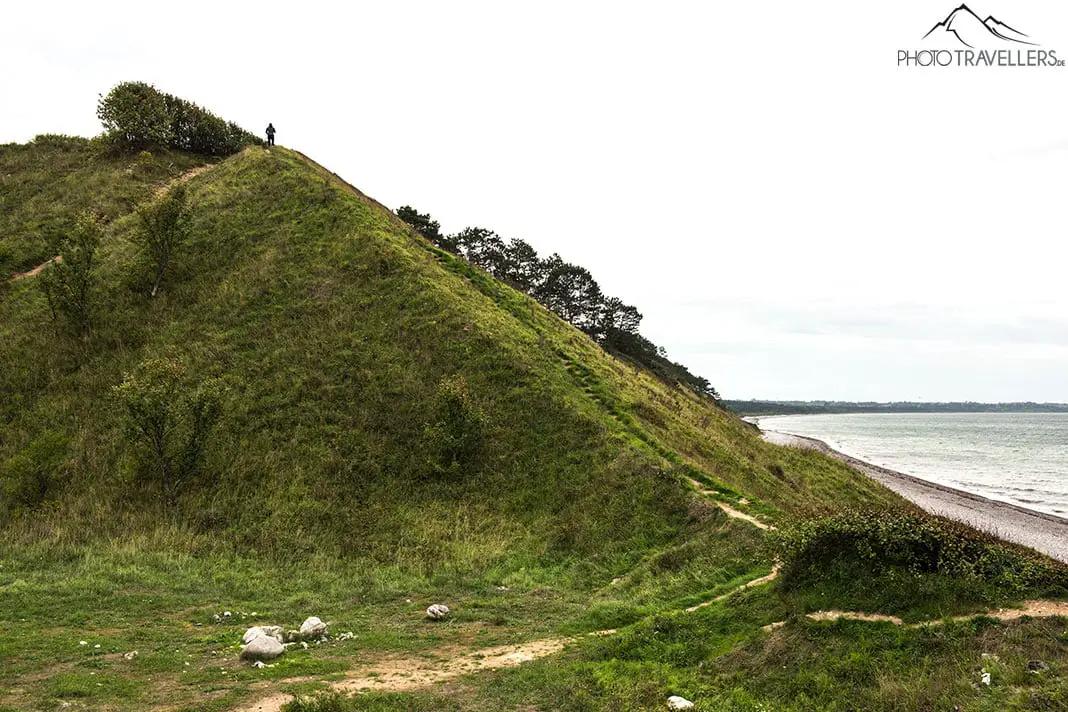 Of course, I went straight up the hill and we walked all the way around - it's a nice, short hike.
 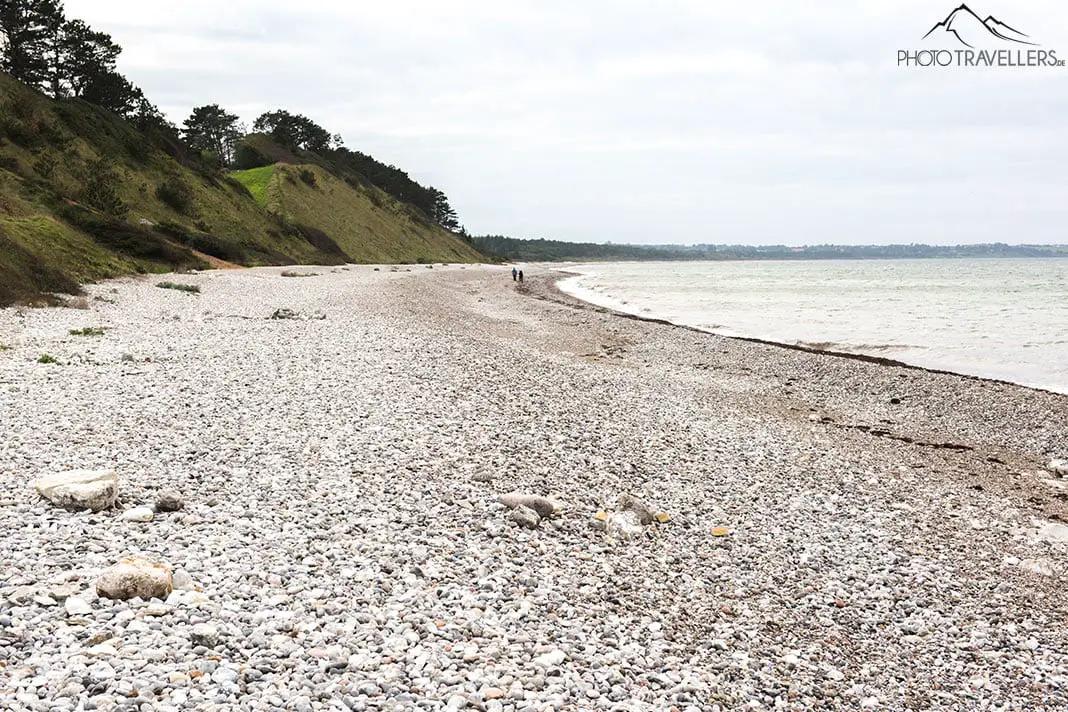 You will immediately recognise the beach at Klintebjerg by the stones and the limestone. Ordrup Naes
This place - Ordrup Naes - really captivated us. The tip, which juts out of Odsherred to the west, offers a rather rugged cliff. At the very end, you'll find a beautiful photo motif: the coast by the sea in the setting sun.
It is very stormy out here and the wind is strong. Nevertheless, we persevered until sunset and didn't regret it. Dramatic clouds piled up around us, a rainbow appeared above our heads and the wind howled around our ears. Out here I felt free. What's more, you walk along fantastically beautiful beaches. There it is again, the Danish Riviera.
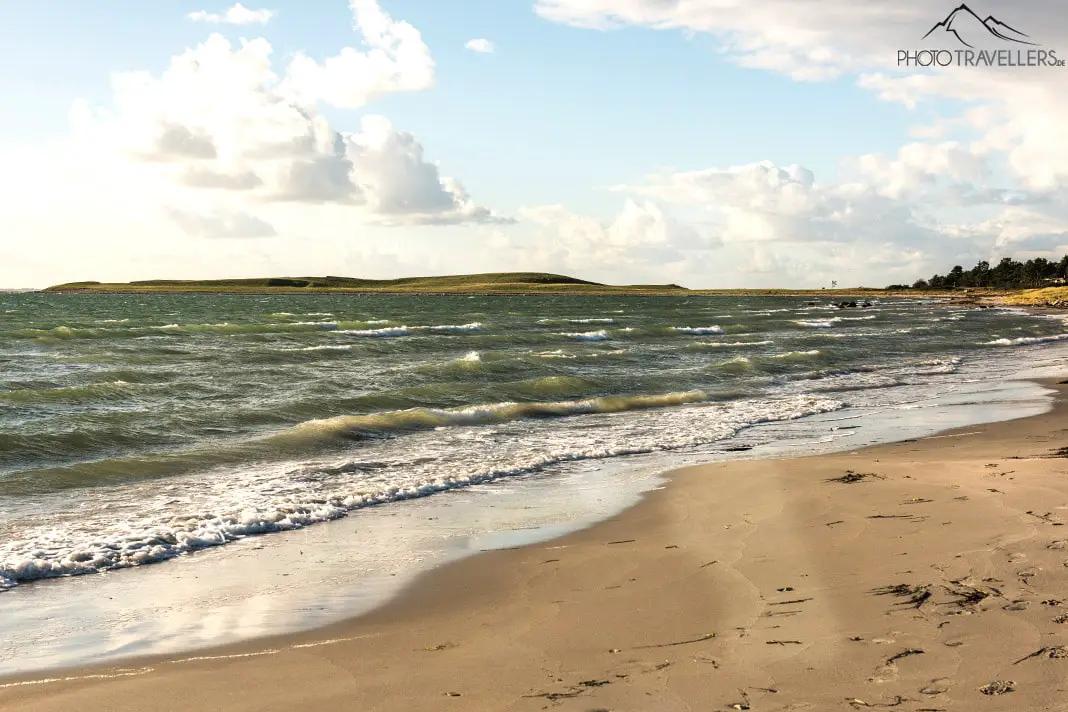
At the western tip near Ordrup Naes you will find beautiful beaches Dragsholm Slot
Dragsholm Slot is definitely worth a visit. If it looks rather unspectacular from the outside, you will definitely get your money's worth inside. The stables surrounding the castle still house animals that are then used by the kitchen: Pigs, cattle, chickens and pheasants.
There is a hotel in the castle. Larger celebrations such as weddings also take place there regularly. No wonder, the building from 1215 is truly impressive. The castle was built at that time to protect the Bishop of Roskilde. Around 1600, however, the Swedes bombarded the castle with modern guns. The castle was completely destroyed.
In 1694, the Adeler family took over the castle and built a rather symmetrical complex. Sometimes fake doors were added to maintain the symmetry. Today, the castle is still privately owned. As in every castle, Dragsholm is also home to a few ghosts. The most prominent is probably the story about the Grey Lady. She was walled up in the castle because she got involved with a man from the lower classes. Today you can even visit the place where she was walled in - but now there is a different skeleton. By the way, the tower of the castle used to be a prison for noble lords.
In the castle there is a hotel, a bistro, which is, however, a fancy restaurant, and a well-known gourmet restaurant. The latter has received a Michelin star. Here, too, regional products are put on the plate, refined with herbs.
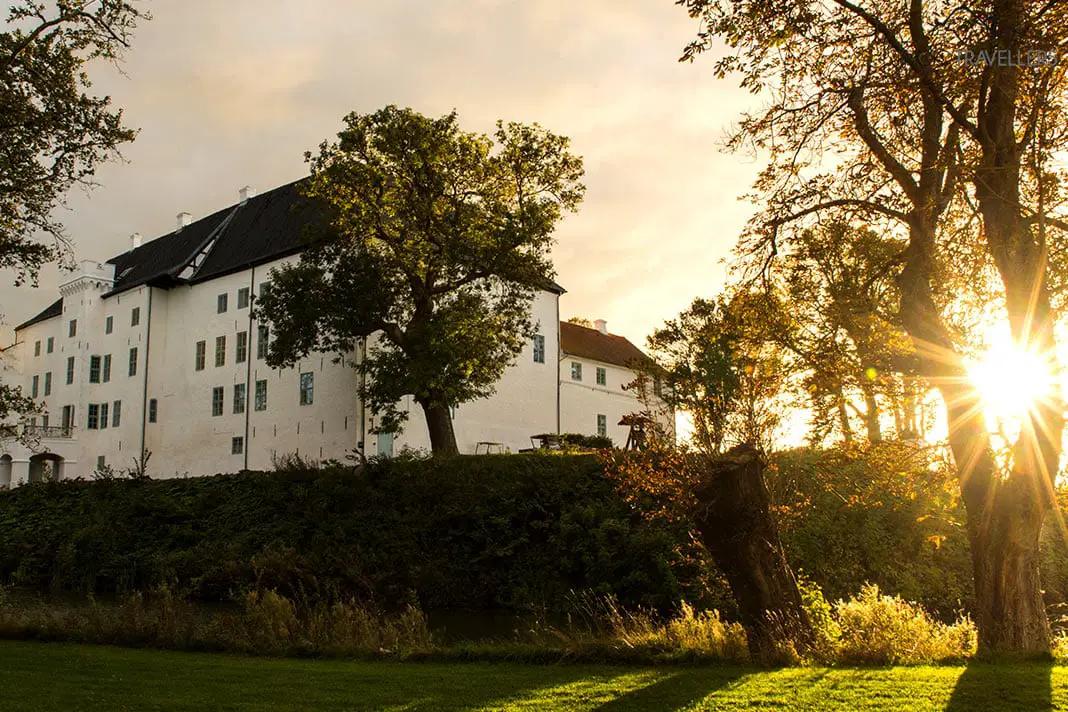
Dragsholm Slot in the evening sun 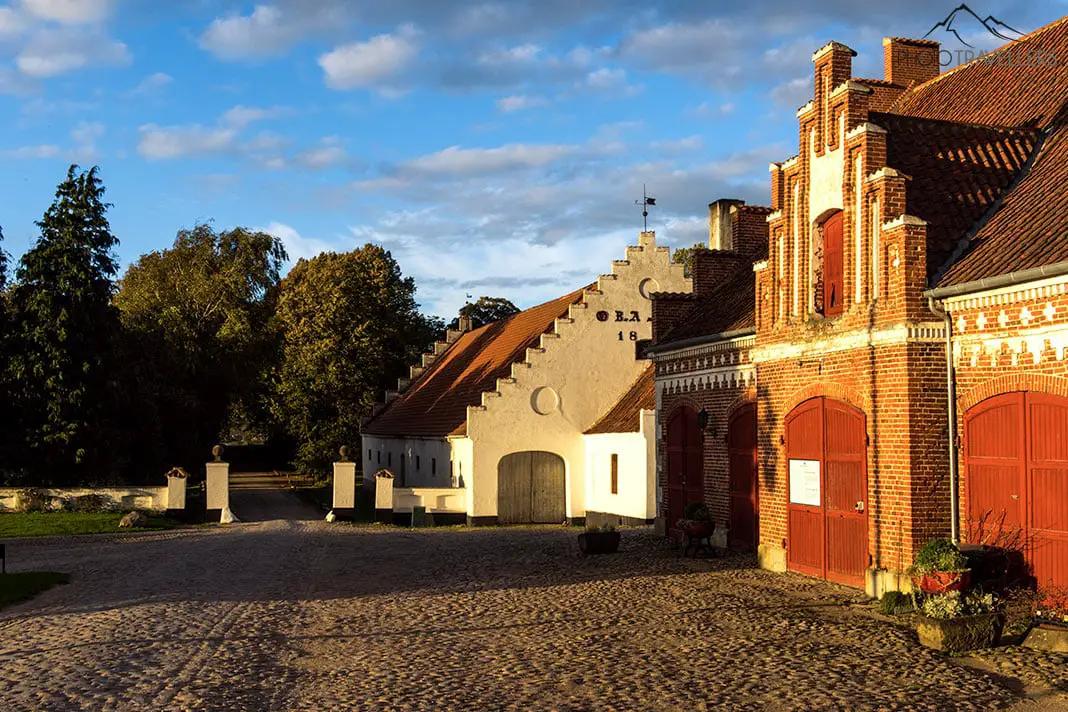 Here you can see some of the stables of Dragsholm Castle The Højby Church
The Højby Church in Højby is not to be missed. It is one of the largest and oldest fieldstone churches from the 12th century. In earlier times it was the scene of a double murder. According to legend, a fine landlord went on a crusade. As a result, his house was defenceless and two men took advantage of his two daughters. The daughters then took their revenge in Højby Church. Inside the church you can still find old lime paintings. The altar is hand-carved. This church is beautifully old and reminiscent of Game of Thrones scenes.
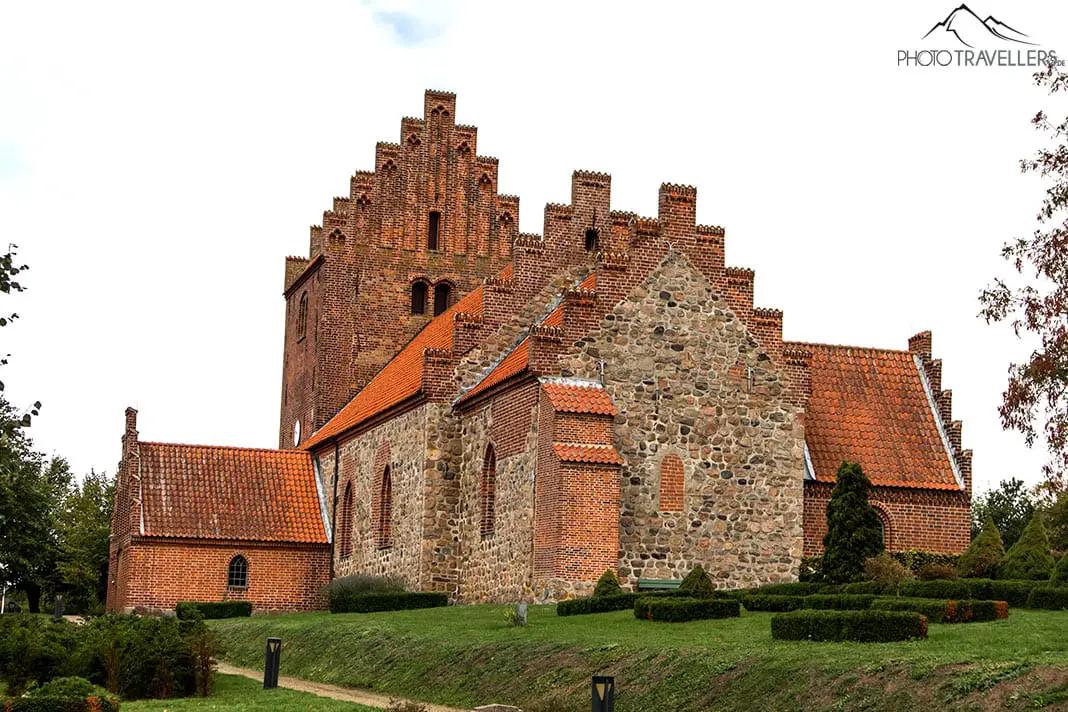
Hojby Church was the scene of a double murder The Rørvig Church
Today, Rørvig Church shines in sunny yellow. But it has changed colour many times throughout history, from white to yellow and back to white again. In 2013, the southern wall of the church had to be rebuilt because the original wall from 1900 had deteriorated badly. During the renovation, an old foundation was discovered, which has now been uncovered.
According to legend, a terrible deed also took place in this church. Strangers came to the island at night in boats. A priest was taken and forced to perform a wedding ceremony. A shot rang out and the next day the bride was found buried under the church floor. Now she is called the Bride of Rørvig.
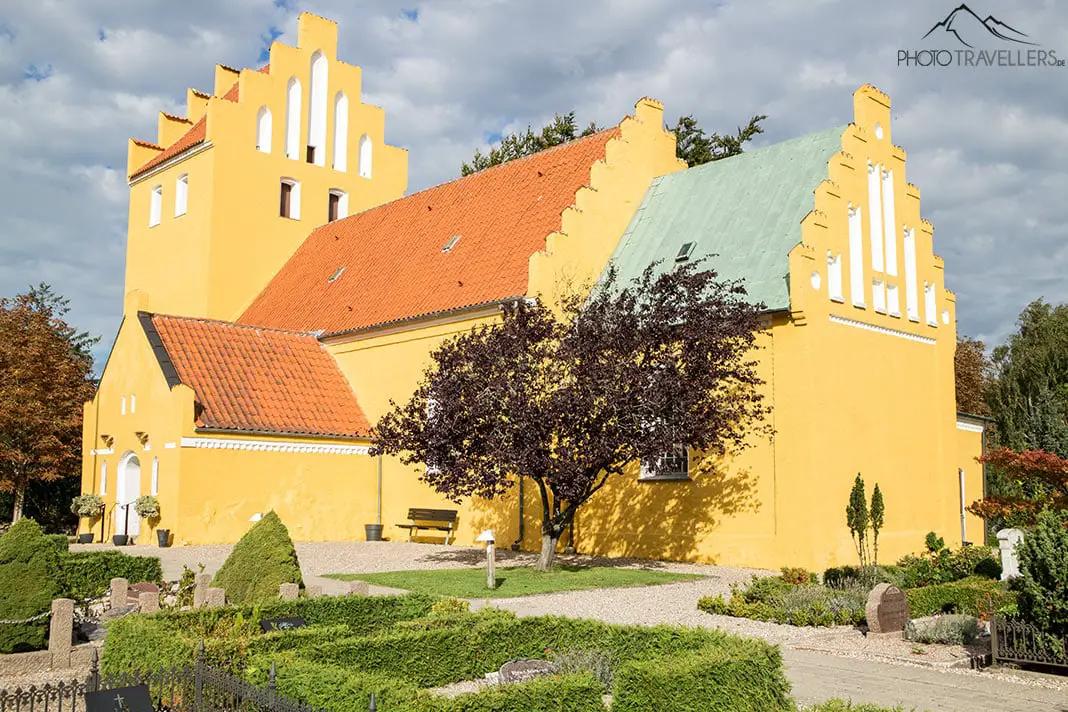
Rørvig Church has changed colour over the years 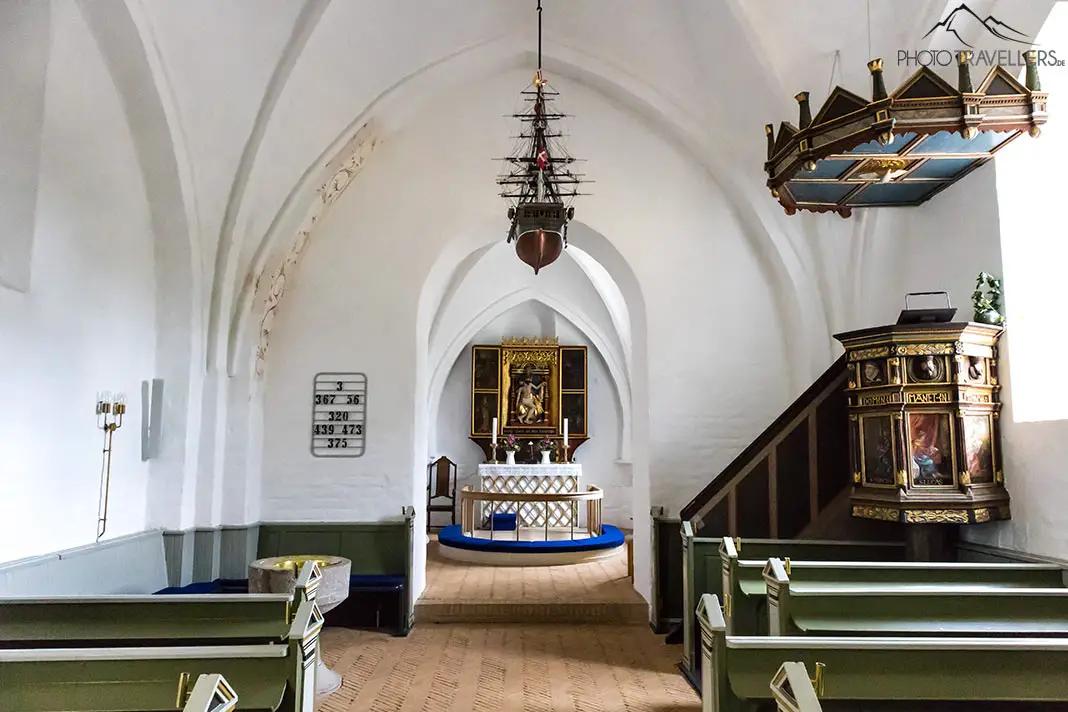 Inside Rørvig Church hangs a boat. You will find this in many churches
 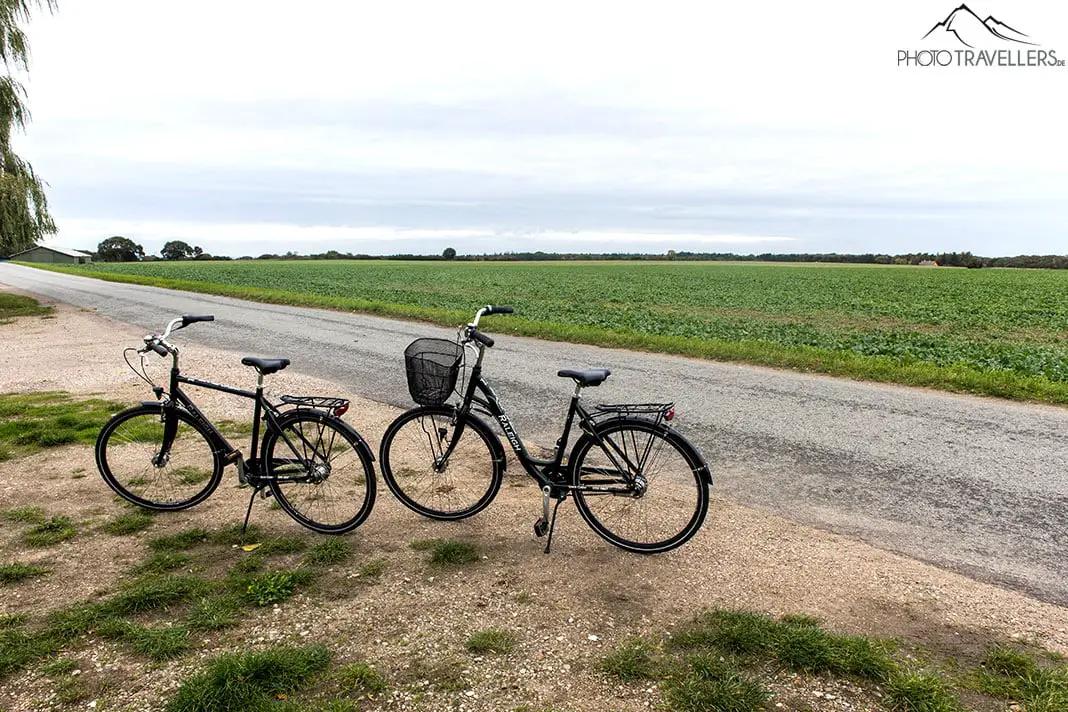 A bike ride around Rorvig and the surrounding area is great - you will see a lot. Gniben
There is a nice legend about the westernmost tip of the Odsherred region. The great troll Lars Krans is said to have set off with sand. He wanted to build a bridge to Sejerø. However, the sand trickled out of his huge gloves, which had holes in them. As it trickled out, the hills of Odde formed. When he saw that there was no more sand in his gloves, he simply threw the remaining sand away. This is how Gniben came into being.
The Saellands headland stretches 15 kilometres into the sea. Gniben was formed during the Ice Age, which ended 14,000 years ago. At first, there was still water between the individual regions. But this was displaced by sea sand. This is how the entire geopark came into being.
Today, there is a military base on Gniben. If you pay close attention, you can follow the exercises, because you can hear the thunder of the shells far across the island. When there are no exercises, the area is open to visitors. You can walk there to the far end of the point and even look at the radar installations and bunkers.
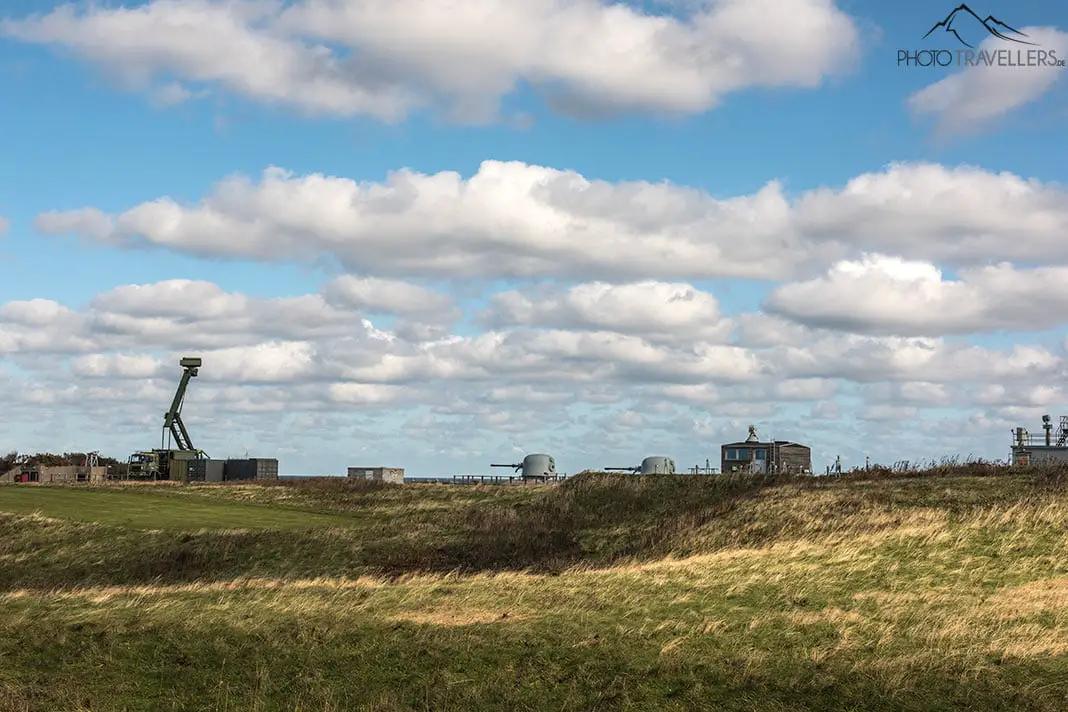
The military station in Gniben is open to visitors when there is no exercise. 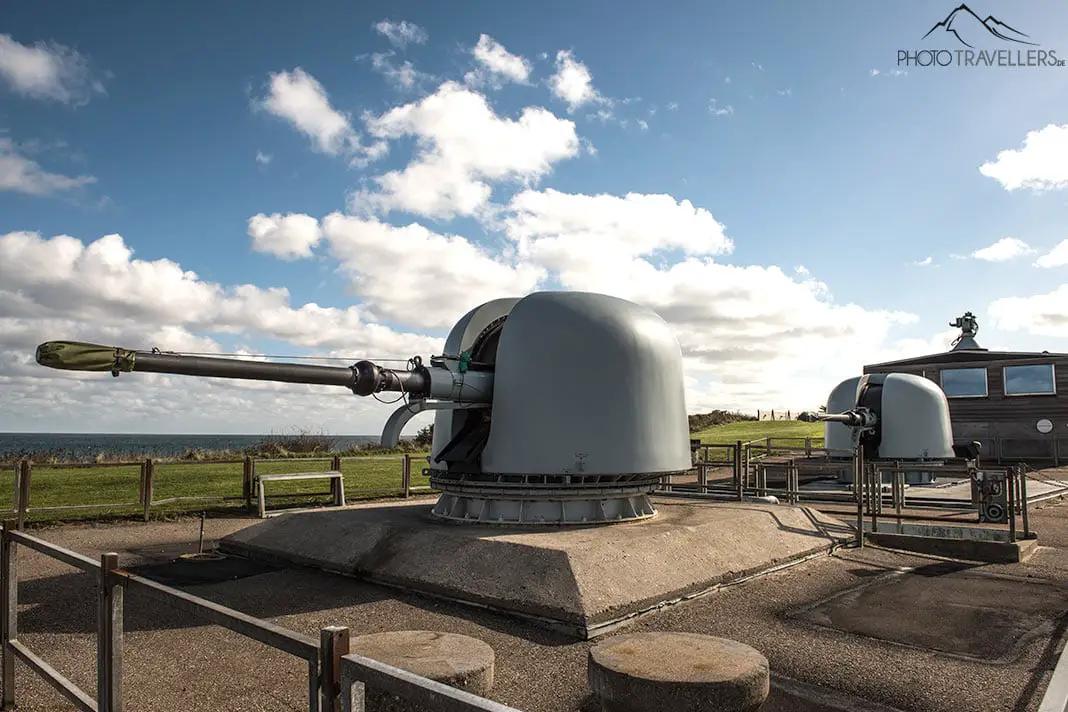 These cannons are on the Gniben military base
 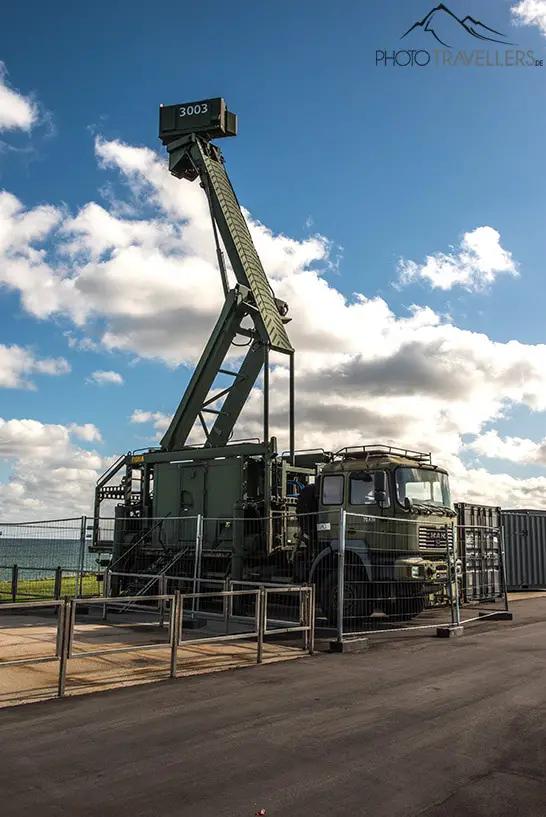 The military base at Gniben is super exciting for men Vejrhøj
Vejrhøj is the third highest hill in the region. More precisely, it is a huge burial mound and lies on the upper edge of the Vejrhøj arch. The grave was probably built 3,000 years ago. From the mound you have a 360-degree panoramic view of the beautiful landscape all the way to the sea.
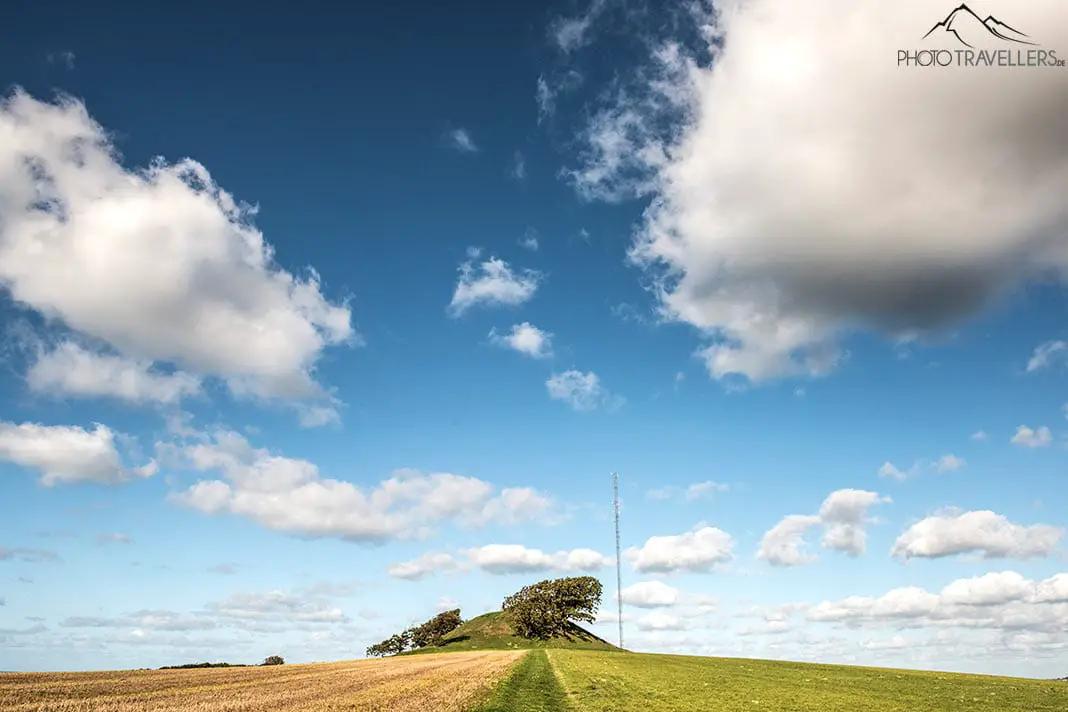
This is probably the most famous motif from Vejrhøj in Odsherred. 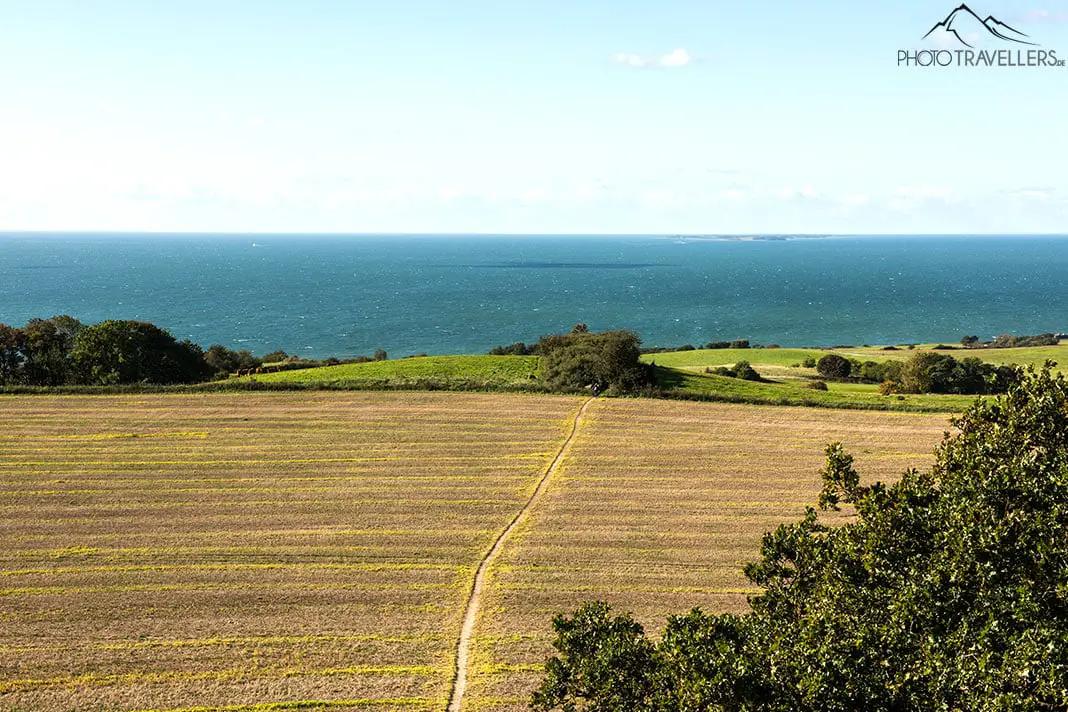 You can even see the sea from up here
 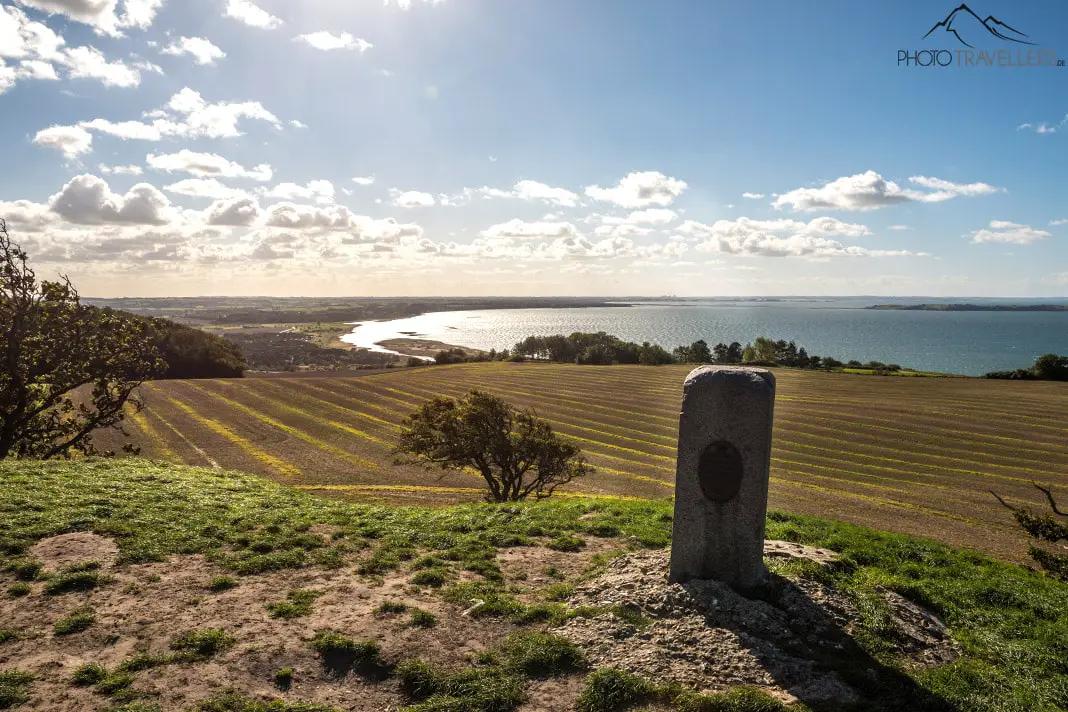 From Vejrhøj you have a 360-degree view of the surroundings Restaurant Det vilde Kokken (The Wild Kitchen)
The Wild Kitchen in Klint, near Klintbjerg, is one of the best restaurants we have eaten in. Anna Andersen and her husband Jørgen Stolz run the restaurant and the Glacier Café right next door. The Glacier Café has a small exhibition that tells a lot about the Geopark. Children can experience the variation of the stone world here. There are also many information brochures. If you are interested, you can also learn a lot here.
Anna and Jørgen opened Det vilde Kokken two years ago. Both have many years of experience (3o years) in the restaurant business. Jørgen is the specialist when it comes to the plant world around Odsherred, while Anna knows how to process everything. Everything on the table comes from wild nature. Herbs, fish, meat - everything is local. The locals and the guests appreciate that. Anna specialises in offering her guests Danish cuisine with surprising local herbs that they don't know.
Every week, a new dish is created and then cooked. We got to enjoy St. John's wort leaves with salmon and pesto as a starter at Anna's, accompanied by nettle bread with herb butter. This was followed by pumpkin soup, risotto and vegetables from the buffet. For dessert we had plum crumble. The food was really excellent and the taste unique. The meat course would have been pork with a special apple arrangement - typically Danish I guess. Another hint: in det vilde Kokken you go to the buffet. The starter is served at the table and the rest is up to you.
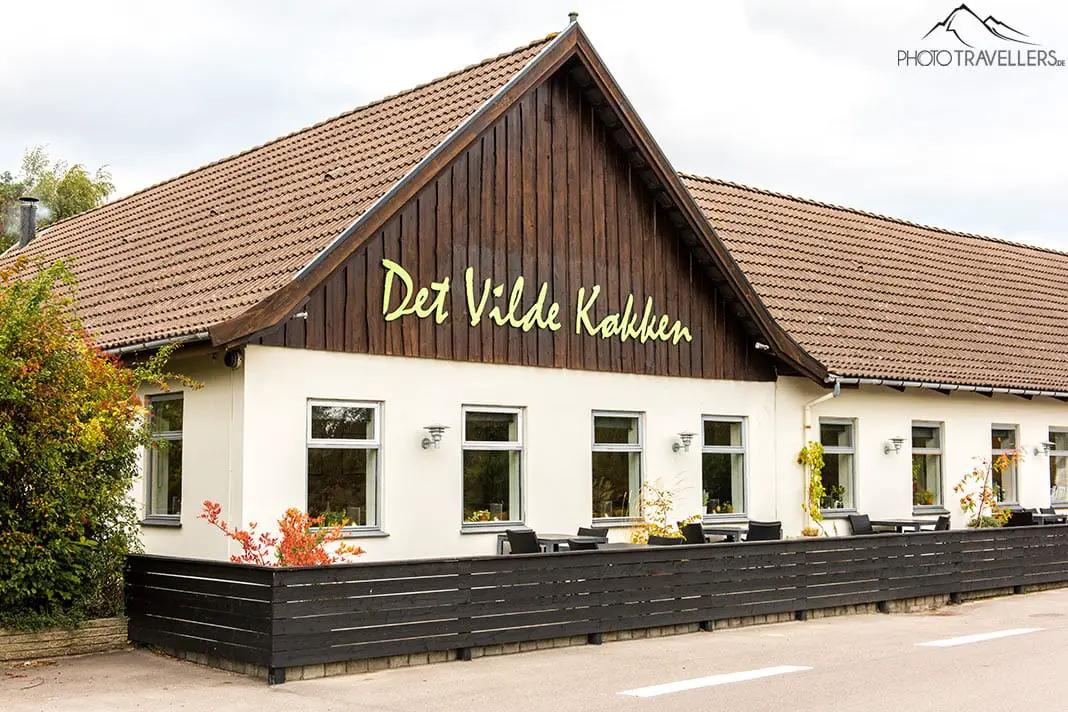
This is a wild place: Anna's Wild Cuisine The Lammefjorden
In the Lammefjorden , man has had a hand in creating a success story. Two kilometres of dam were drained to create 55 square kilometres of farmland. During the Ice Age, the Lammefjorden area was covered by thick ice. When the melting process began, much organic material remained, which fertilised the soil.
The area became Denmark's vegetable garden and is now known for its potatoes and carrots. In addition, a lot of red cabbage, beetroot, parsnips and onions are grown. Recently, asparagus has also been grown. The soil is so rich in nutrients that the farmers can save themselves the trouble of fertilising it
In some of Odsherred's restaurants, the connection to nature is very strong. They develop their flavours on regional products, including those from the Lammefjorden. Our tip: Make a quick stop at Lammefjordens Spisekammer. This farm shop stocks not only the usual vegetable varieties, but also other delicious specialities. Right next to it is also the so-called visitors' field. Here everyone can see what exactly is grown on Lammefjorden.
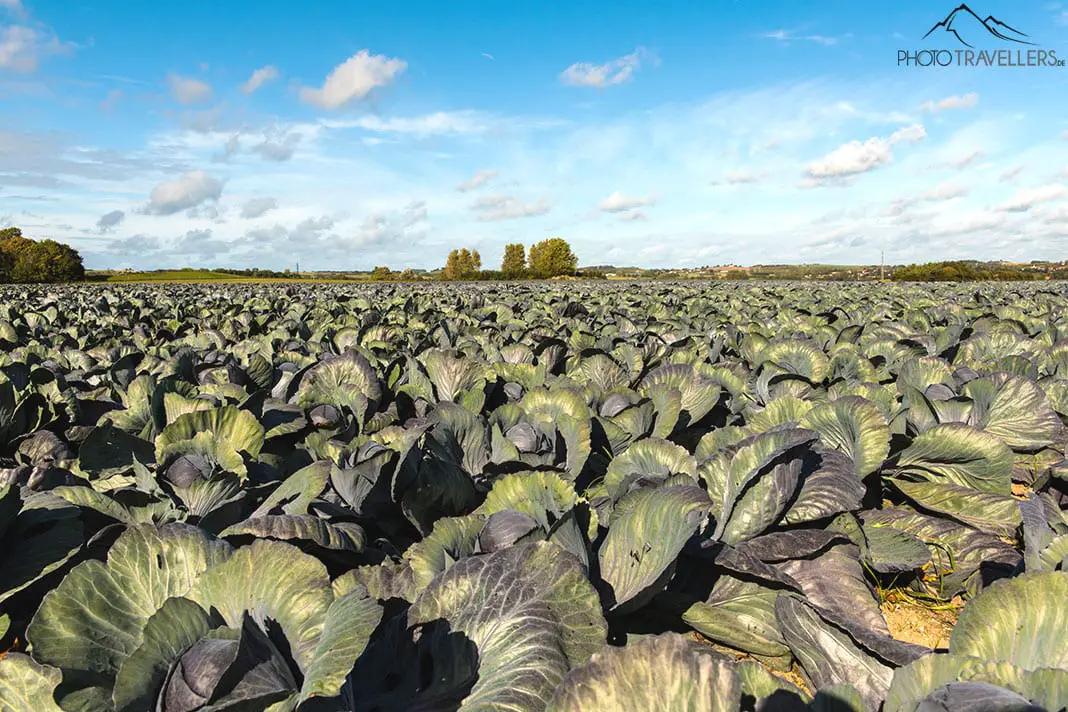
Huge fields of vegetables represent the Lammefjorden region. What is this? Blue cabbage 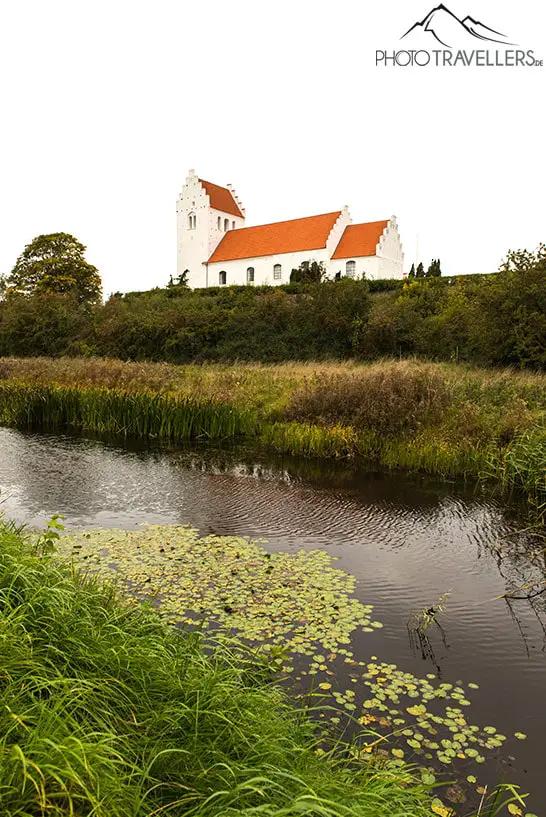 Directly on Lammefjorden flows the canal. Behind it you can see the church The Birkehoj grave
The megalithic tomb, a hen grave, was built 5,200 years ago. The Birkehoj grave is the largest passage grave on Zealand. It has probably served as a communal grave for 50 generations. You can crawl along the long corridor and then get inside the tomb. It is definitely worth a visit.
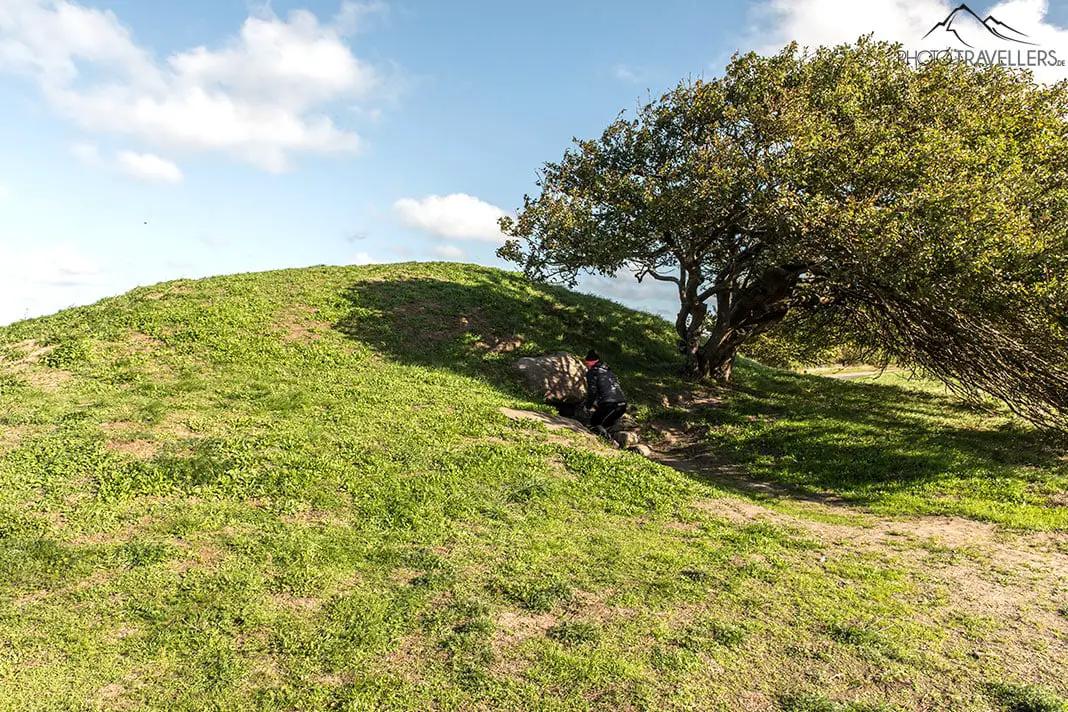
From the outside, the grave is now densely overgrown with green. 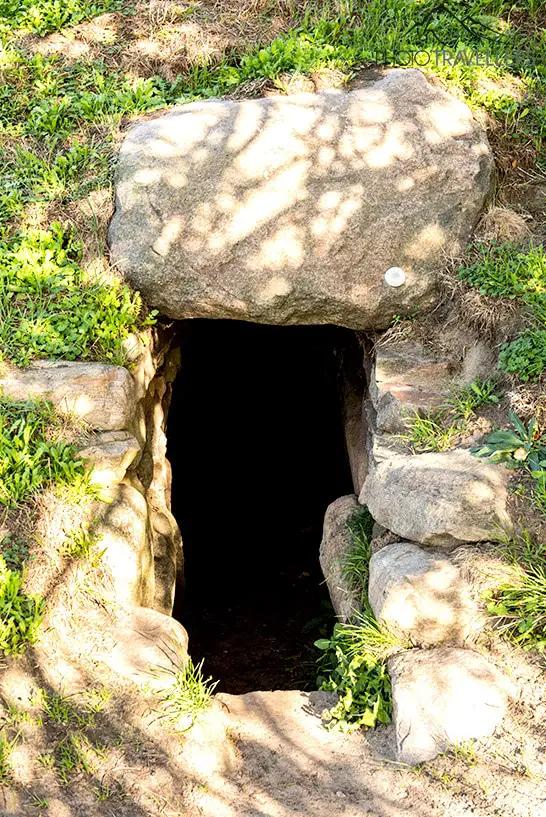 Here you can see the entrance to the Birkehoj burial chamber
 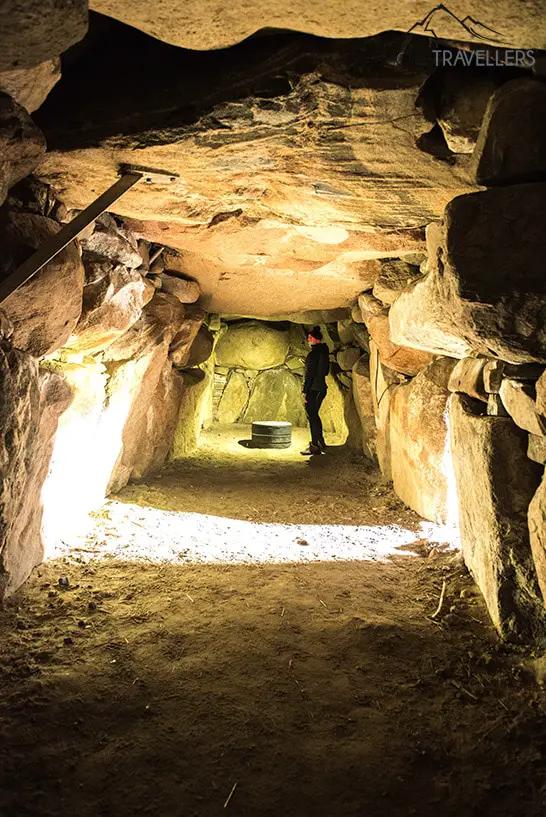 Inside the Birkehoj burial chamber you can stand and look at everything Vejrhøj Vingard
Since 2011, Nina and Niels Fink have been living their dream of a winery. Small but nice is the Vejrhøj Vingard. As the name suggests, it is a ten-minute walk from Vejrhøj. Accordingly, you have a similarly breathtaking view of the surroundings from the grounds of the winery.
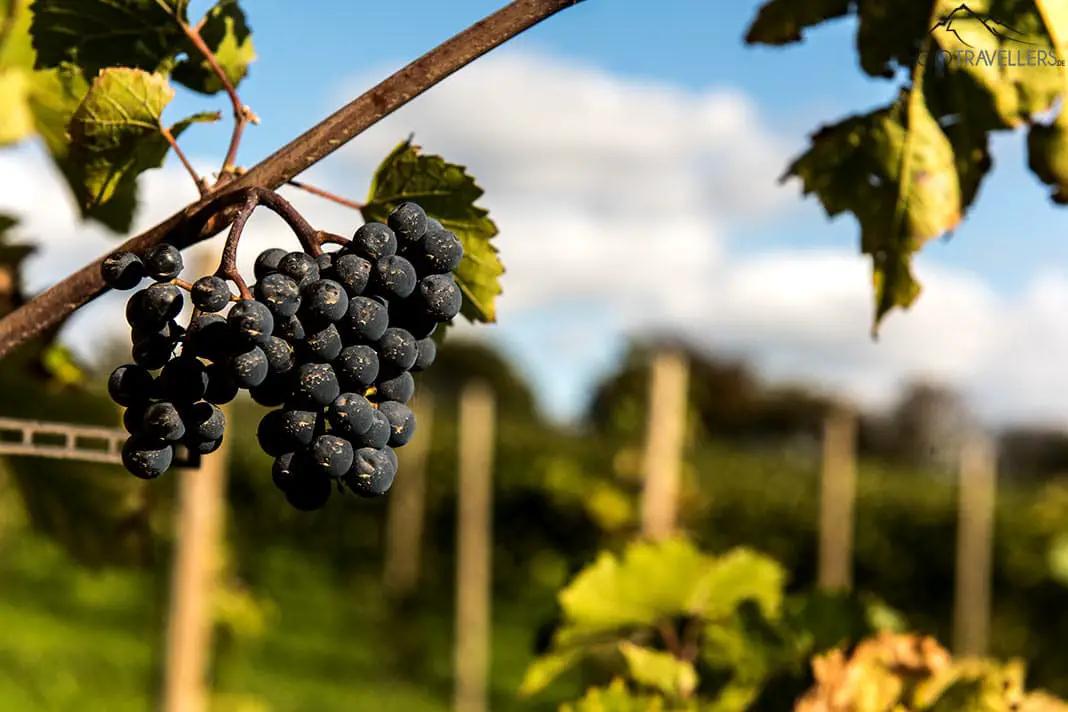
We walk with Niels through picturesque vineyards. In total, the Finks have three hectares of land and produce 10,000 bottles in a year from about 10,000 vine plants. They supply the shops in the area and many restaurants. In addition, the Finks offer guided tours of the winery. They use a German wine press from 1962, have barrels from France and the wine there tastes really great.
It's small and quiet at the Finks', but very high-quality and fine. Both are also trendsetters in Denmark. At the moment, the wine wave is sweeping down from New York, London and Copenhagen to Germany. The orange wine - prepared according to an ancient recipe of a tradition in Georgia - will soon be THE in-drink par excellence. You can already get it at Vejrhøj Vingard.
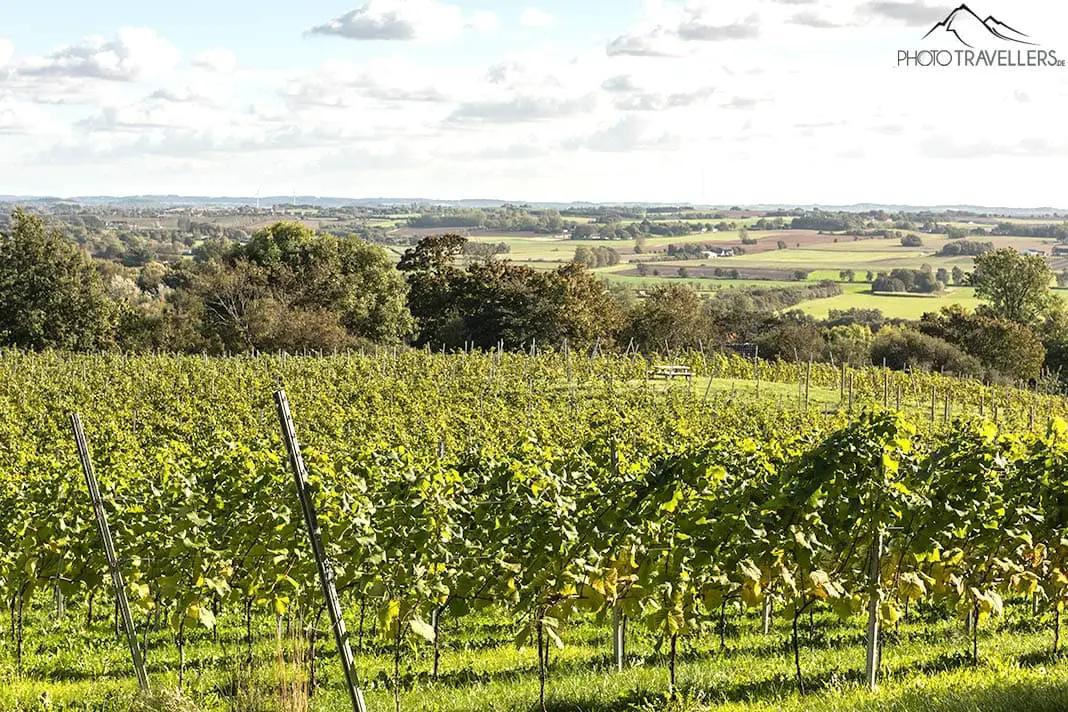
From Vejrhoj Vineyard you have a fantastic view of the whole area. 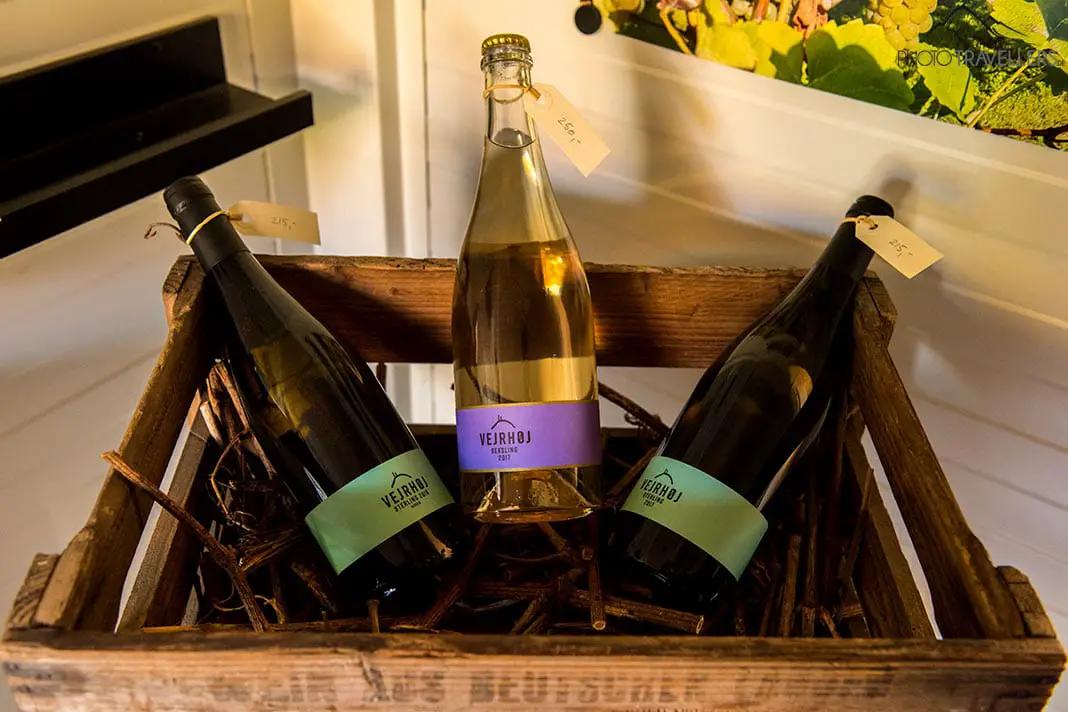 Here you can see part of the winery's wine selection. Næsholm castle ruins
The ruins of Næsholm Castle are one of the few ruins in Denmark that have been completely excavated. You can reach the ruins, which lie on a small peninsula surrounded by water, via a small footbridge. Parts of the building have been dated to 1278. According to scientific findings, the castle was stormed around 1340.
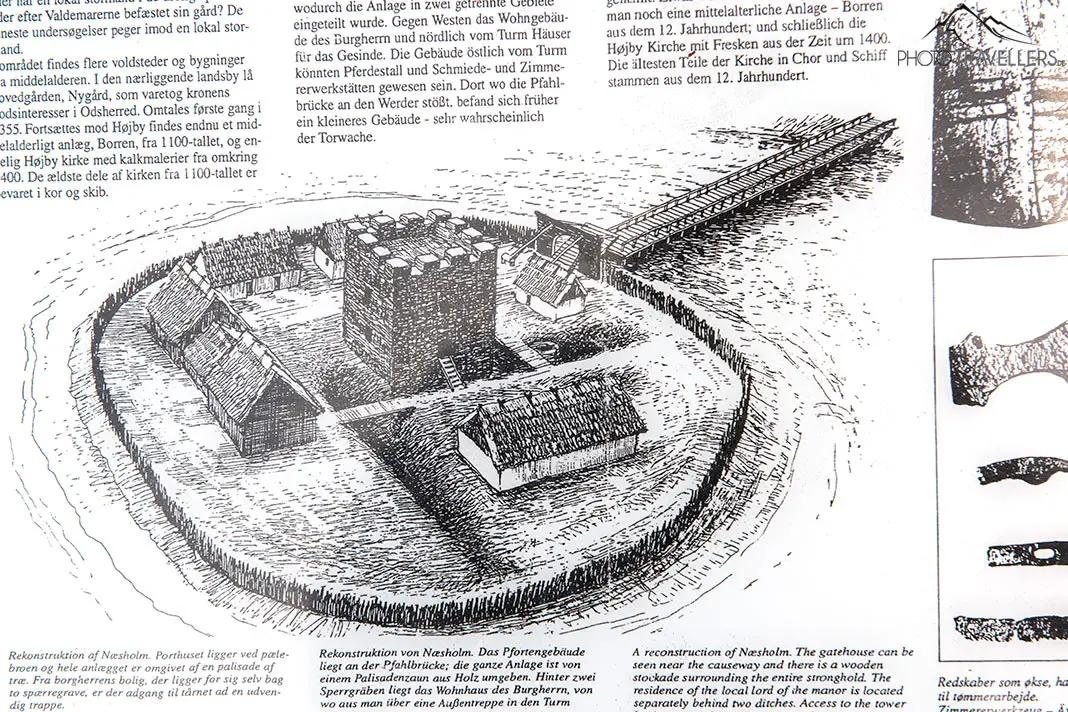
The information board shows what the castle ruins must have looked like back then 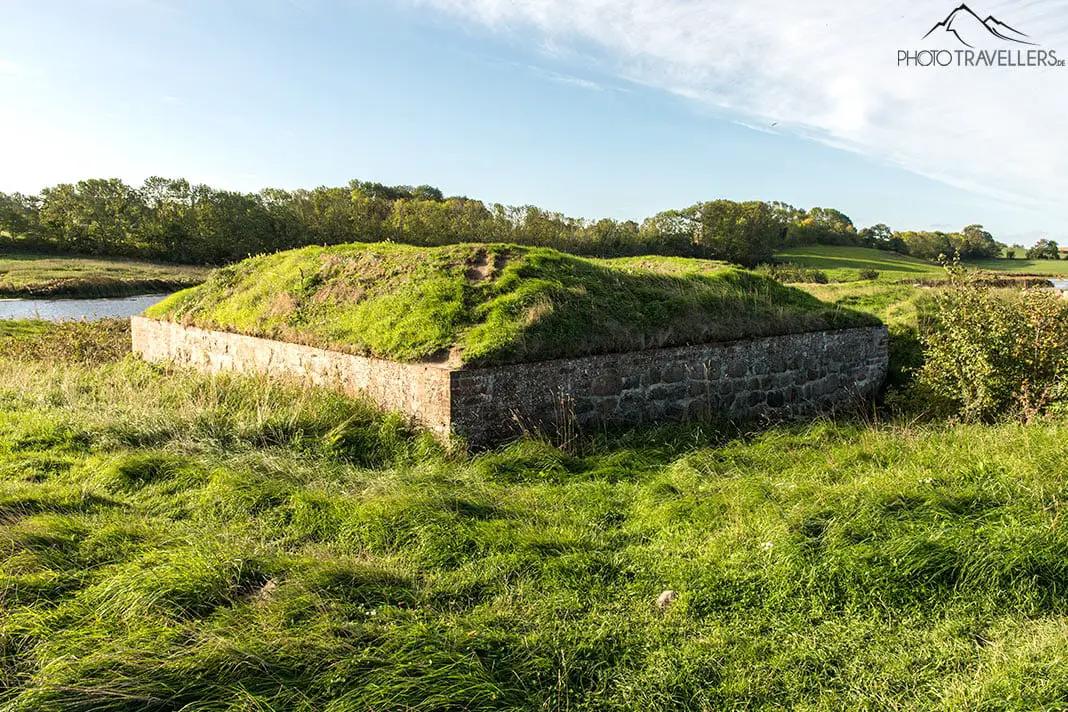 Here you can see the remains of Naesholm Castle
 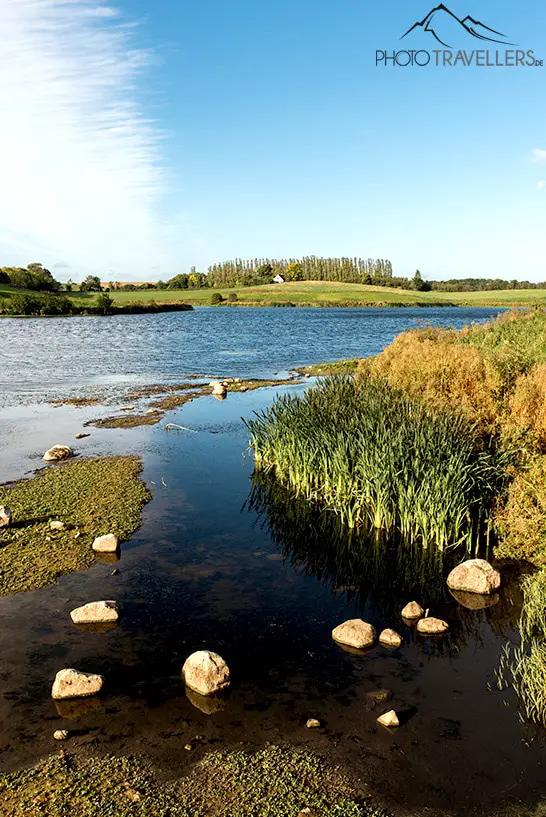 Naesholm Castle used to be surrounded by a lot of water. Today only the castle is missing Anneberg Park
I recommend this park to you. Anneberg Park is the site of Odsherred's former mental hospital. When you drive into the park, you head straight for the majestic main building. All the buildings were built between 1913 and 1921, combining illness with nature.
Huge trees stand in the park, there are seats everywhere. The institution was in operation for half a century. Then it became Anneberg Park. Now the complex houses flats, freelancers offering treatment, the theatre school and the theatre.
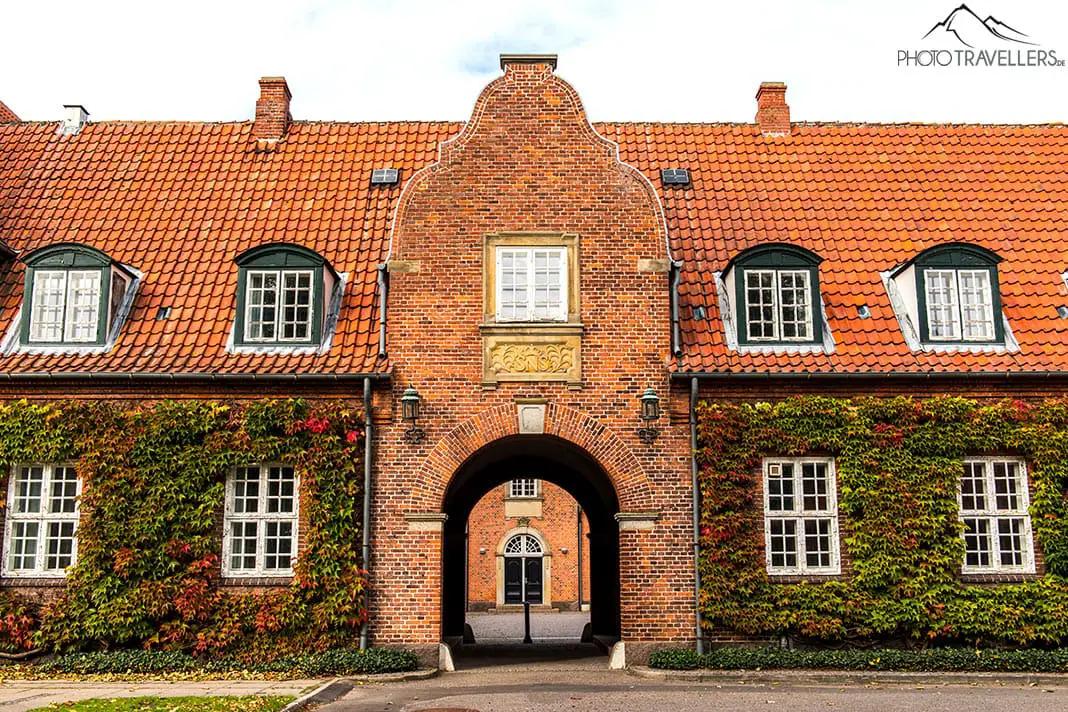
The main building of the Anneberg mental hospital looks beautiful 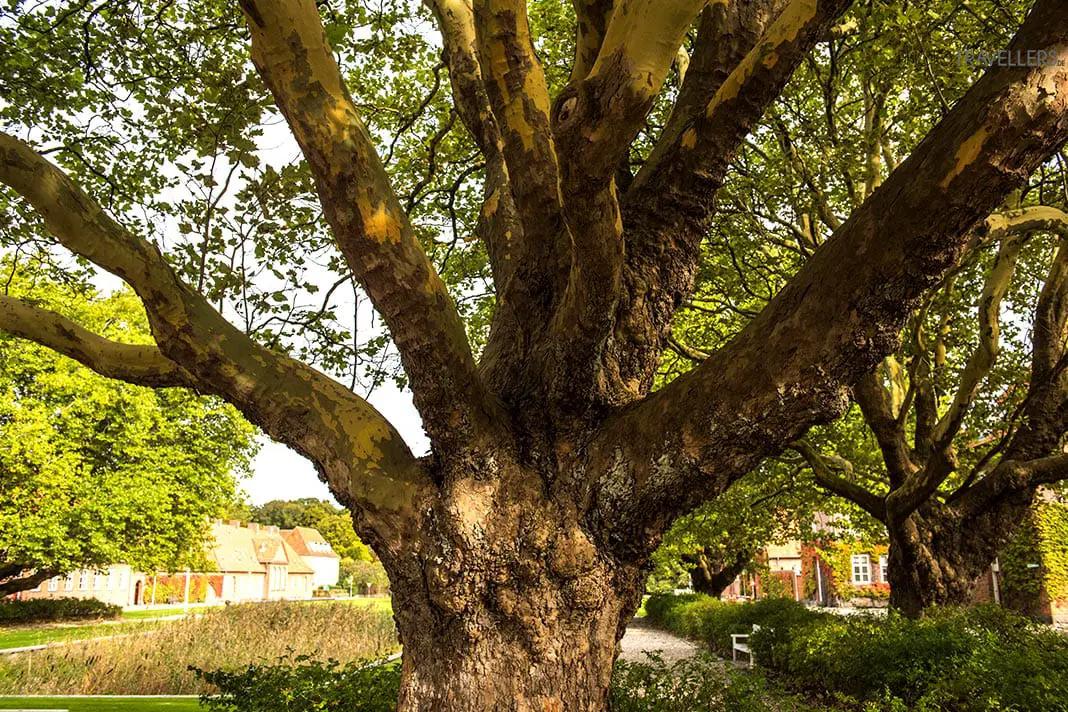 In Anneberg Park, recovery was equated with nature Ulkerup Skov
The name Ulkerup Sk ov already indicates that there was first a moraine landscape in this area and that it was then made habitable. By means of forest clearing - Ulkerup.
The farmers in Ulkerup were forest farmers. The fields were located in the most fertile places. Ulkerup Skov is situated in the middle of an absolutely rustic forest. Here you have the feeling of being transported back to the age of knights. And in this gem are the remains of forest villages. You can still make out the long walls. The rest of the village, which is quite central in the forest, consists only of wall outlines.
In Ulkerup Skov you will find wacky figures. They are also called the souls of the villagers. At night, the black, hooded figures are said to roam around. They are about one metre high. Nearby, at the old village pond, there is now an exhibition house where you can see a model of what the village used to look like.
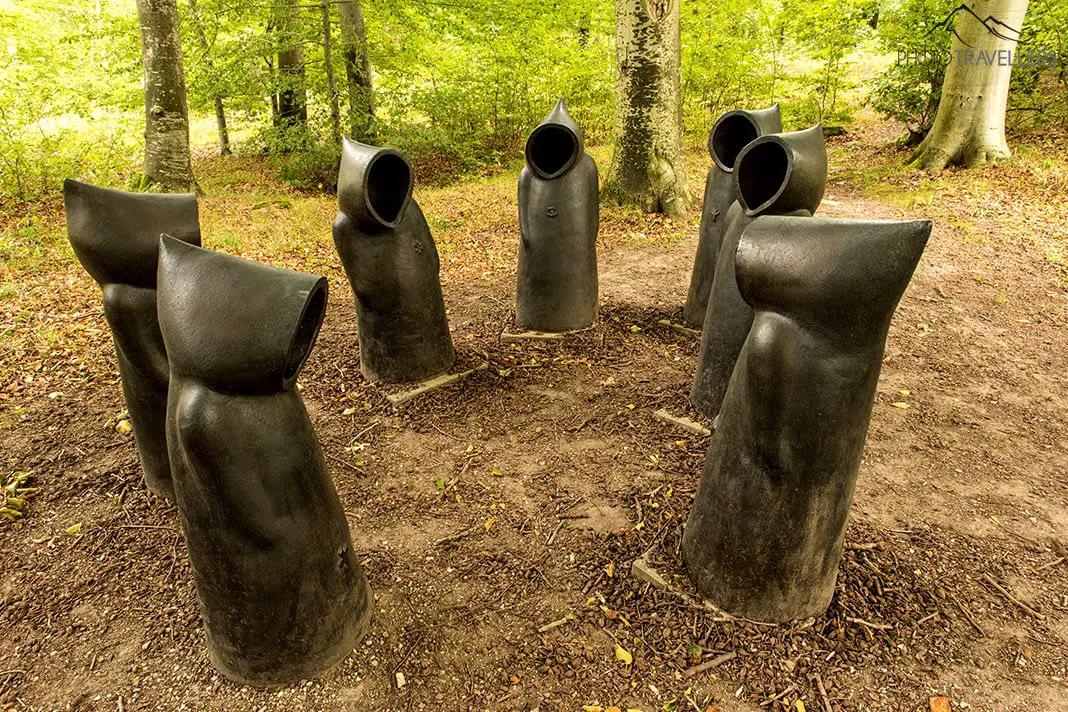
These dark figures are the souls that haunt Ulkerup Skov. 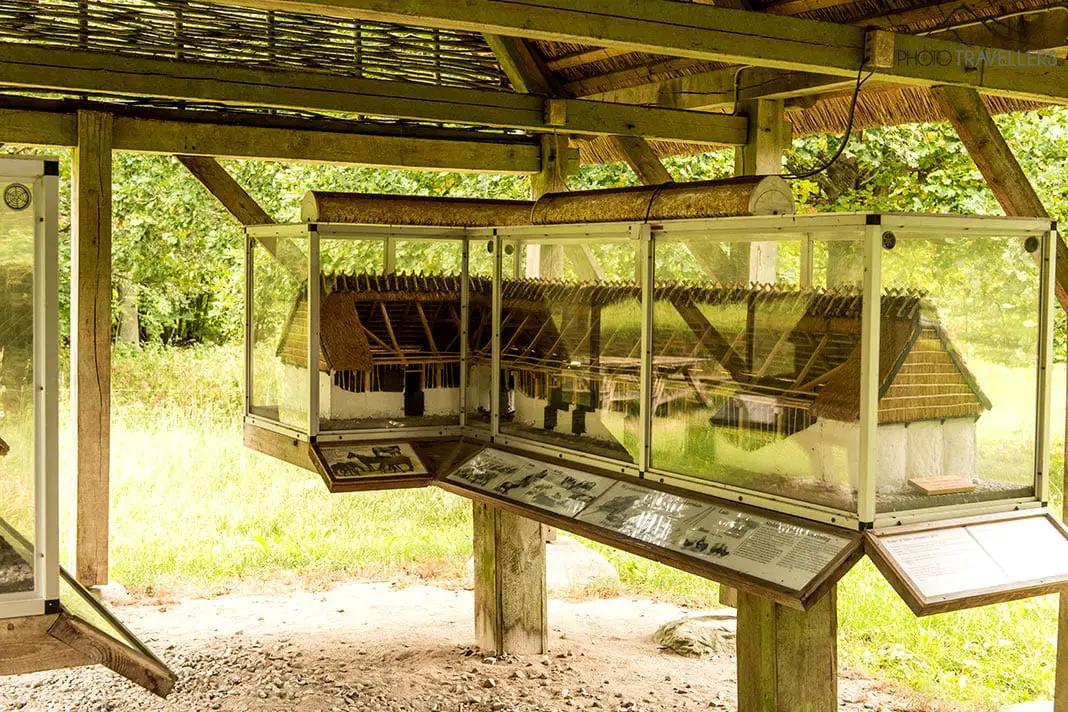 This model is in Ulkerup Skov and shows how the village used to look like.
 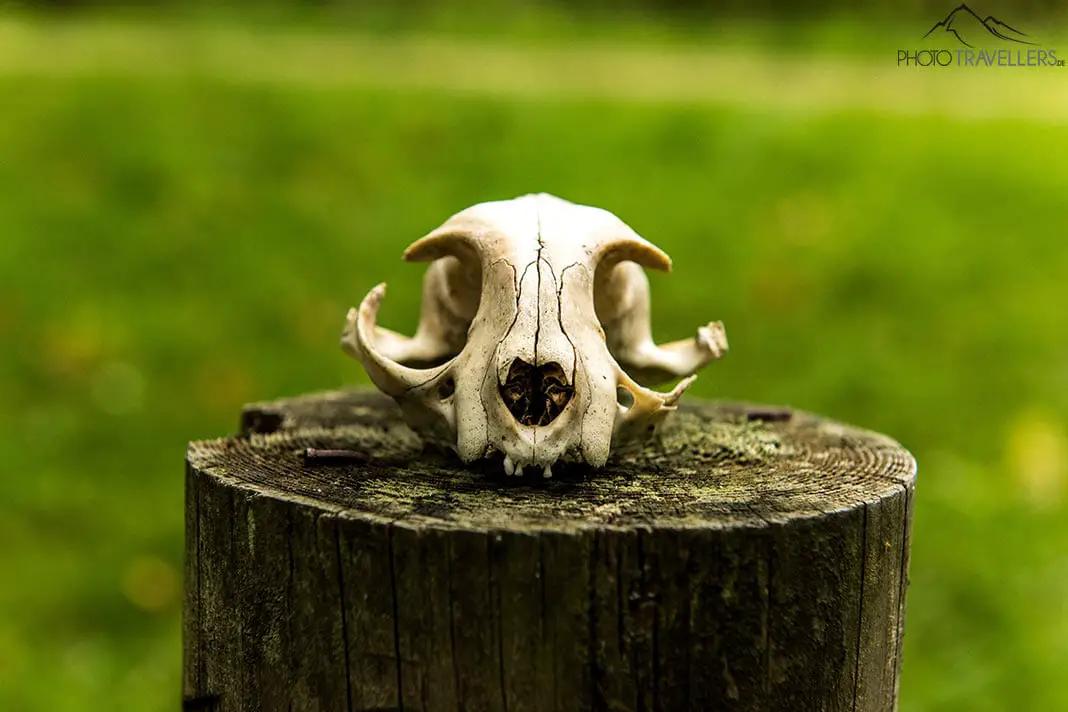 This skeleton was lying in the forest in Ulkerup Skov. Grevinge Church
This Romanesque fieldstone church of Grevingerises pompously from the surrounding graveyard. It was built in 1165. In the 15th century, the church was extended and a brick chapel was added. In the 16th century, an armoury, the distinctive tower and the sacristy were added.
According to a legend, trolls tore down the entire structure at night, which craftsmen had previously built. The craftsmen asked God for help. An iron rod grew out of the ground. This was thus consecrated and the trolls left it alone. In the outer façade of the tower, more precisely in the north wall, there are stones that have clearly carved elements. The most famous is the stone depicting a hand.
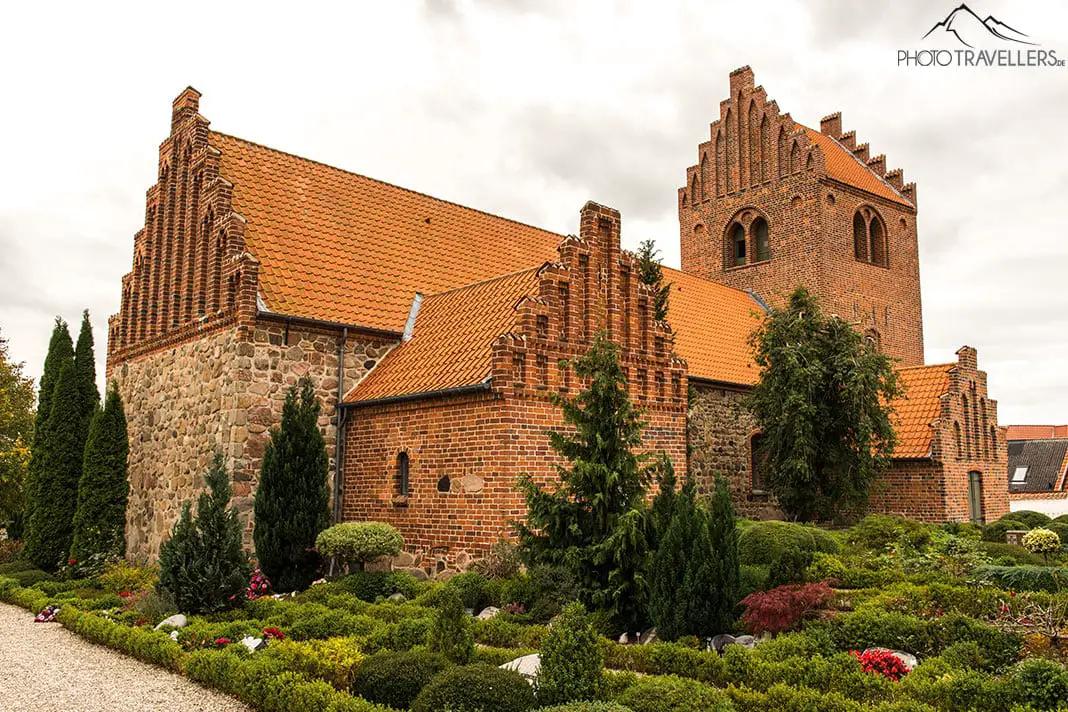
Grevinge Church looks very pompous Asnæs Church
Asnæs Church is also a very old building. The fieldstone church was built in 1140. It was dedicated to Olaf the Saint. Olaf sailed with his brother to win Norway's throne. The church inventory dates from the 16th century. The cross above the baptismal font dates from 1175 and is hand-carved. A long stone is set into the south wall of the church in the outer façade. It contains Bronze Age rock carvings from more than 3000 years ago.
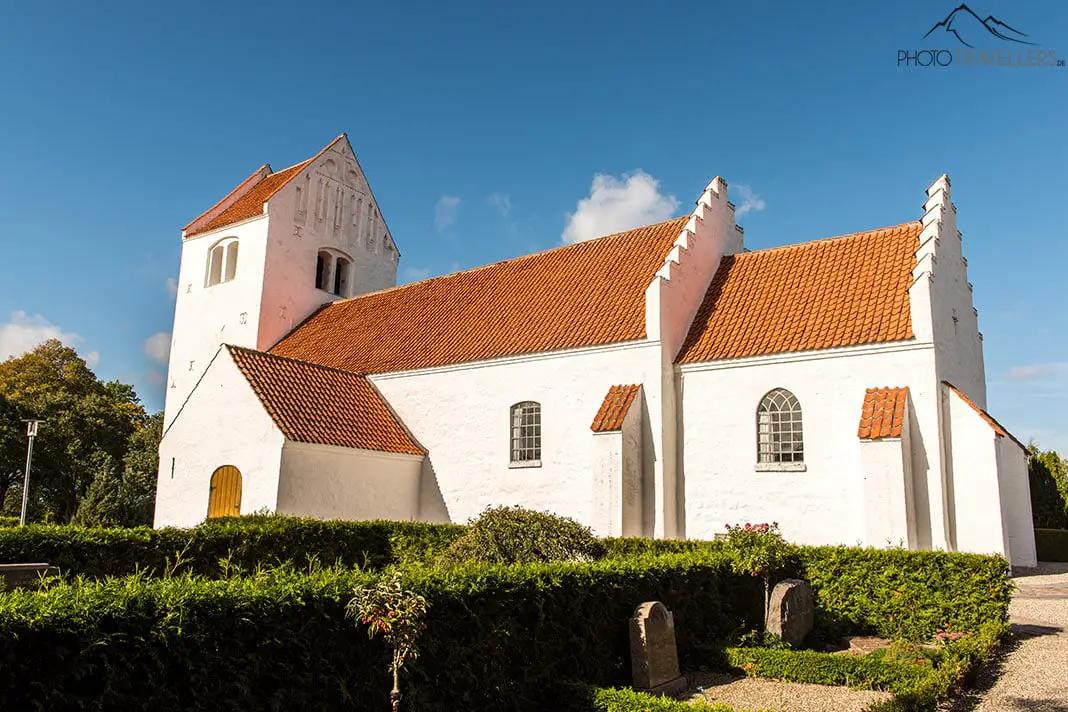
Asnaes Church is one of the oldest fieldstone churches Lumsas Mill
1834 is written above the small white door in the high tower of the mill. Lumsas Mill is quite beautiful and is situated in the middle of Lumsas. It is built in such a way that there is a passageway underneath it. In summer you can visit the museum.
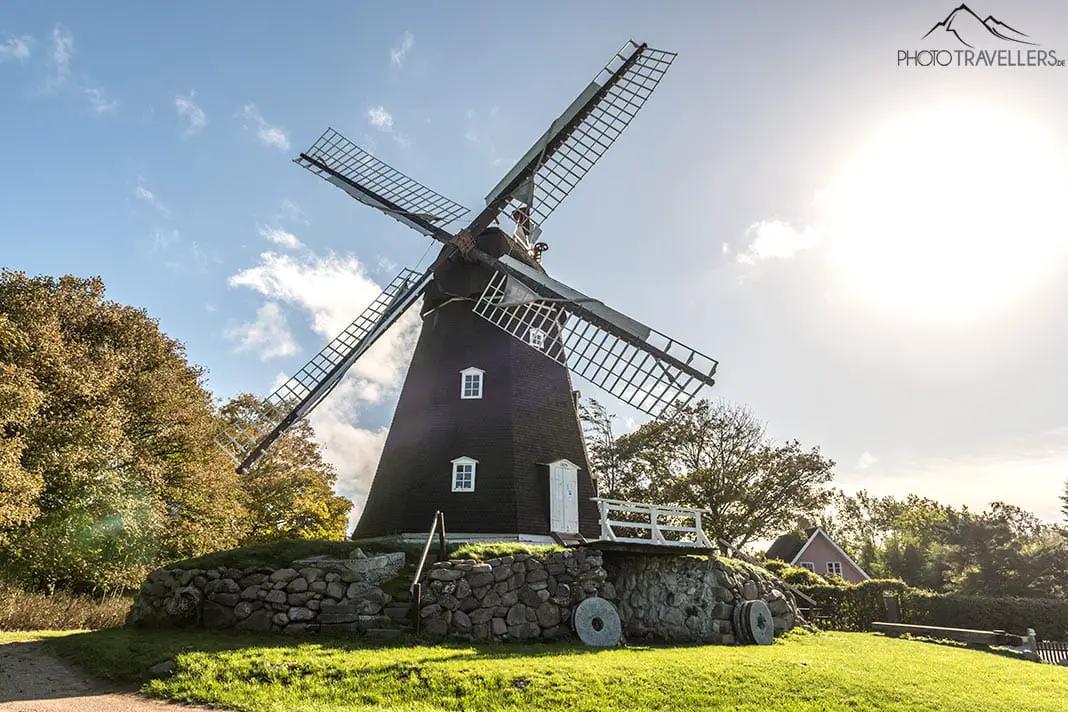
The mill in Lumsas is a museum that you can visit in the summer. Odden Harbour
If you are already in the Gniben area, you should definitely visit Odden harbour. Small, ancient boats are moored here and the harbour is also a great place to visit.
Our tip: There is a fish shop right at the harbour. In summer, visitors and locals queue up in front of the shop. Of course, we tested the display a little and found it to be excellent.
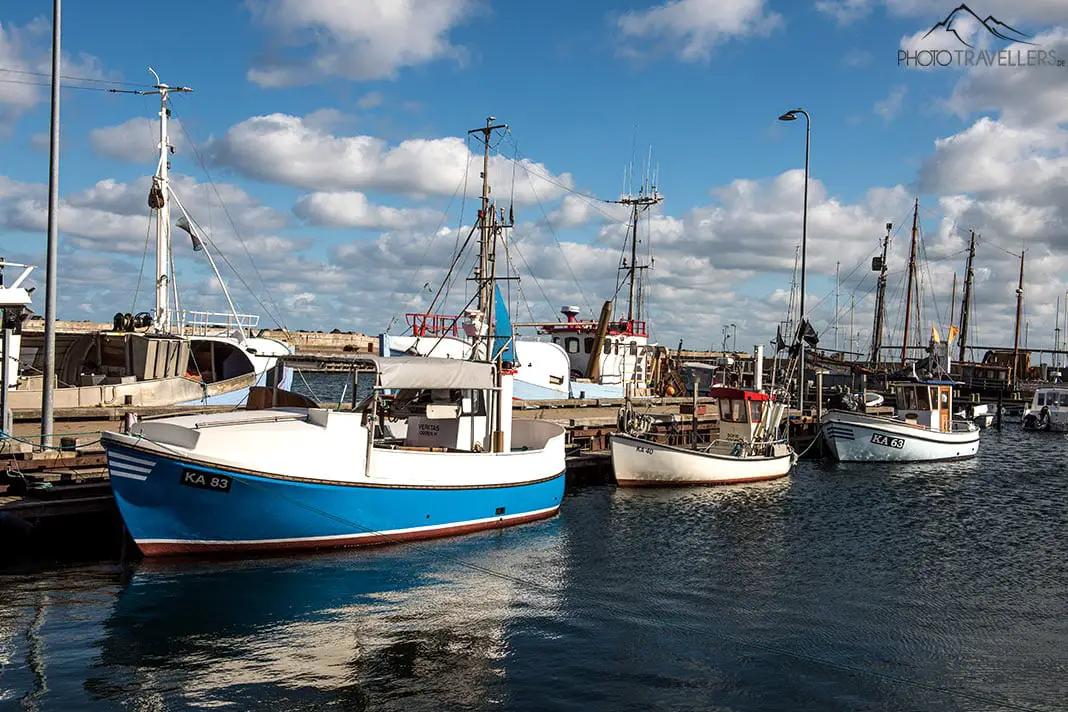
The harbour of Odden is small, but very beautiful to look at. 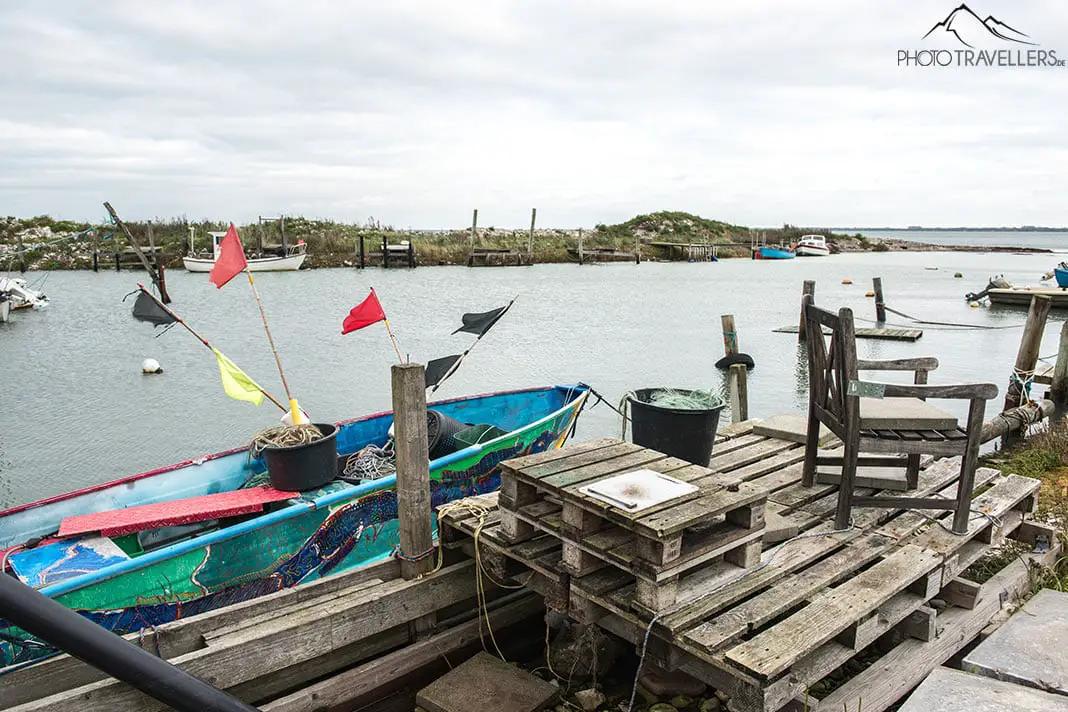 Small, old ships are moored at Odden harbour Odden Church
The church of Odden looks quite spectacular from the outside. Inside it is very simple. Of course, the typical Danish ship hangs in the church. It was built in 1914. There are still old oil paintings in the arches on the ceiling. Two bells hang in the tower. The smaller one dates from 1400, the larger from 1599.
The church is dedicated to the naval hero Willemoes. In the cemetery you will also find an old monument with cannonballs. Peter Willemoes is a folk hero who distinguished himself in the battle of the Danes against the English. He reacted very bravely in battle, which made him a pop star.
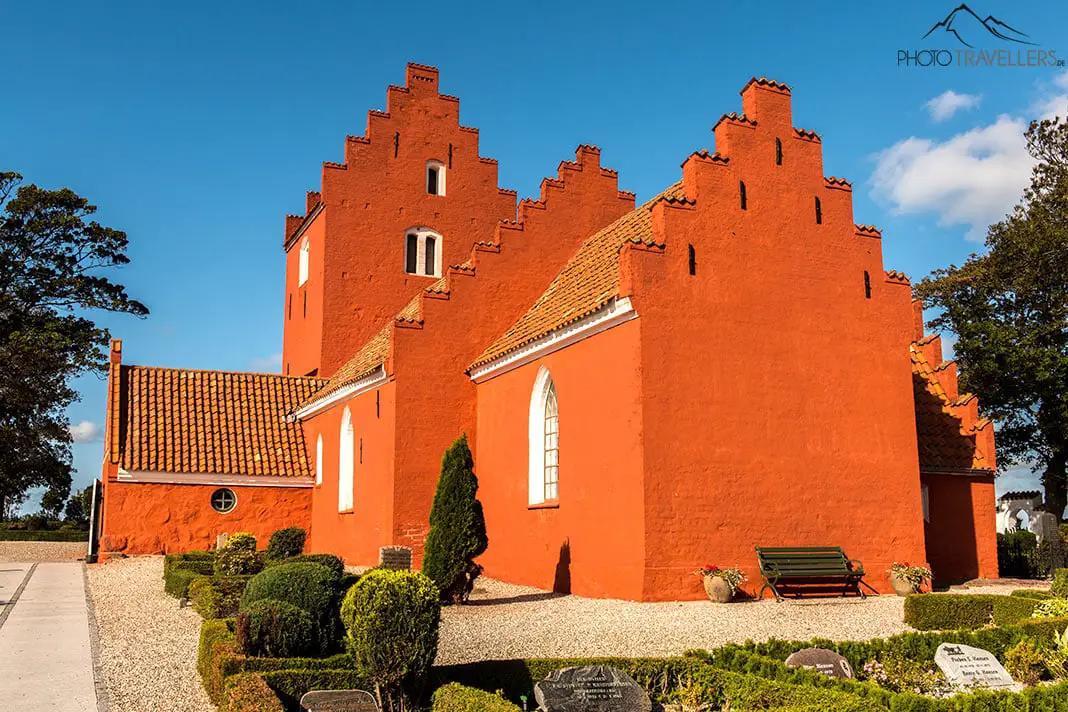
Odden Church is painted in a bright colour 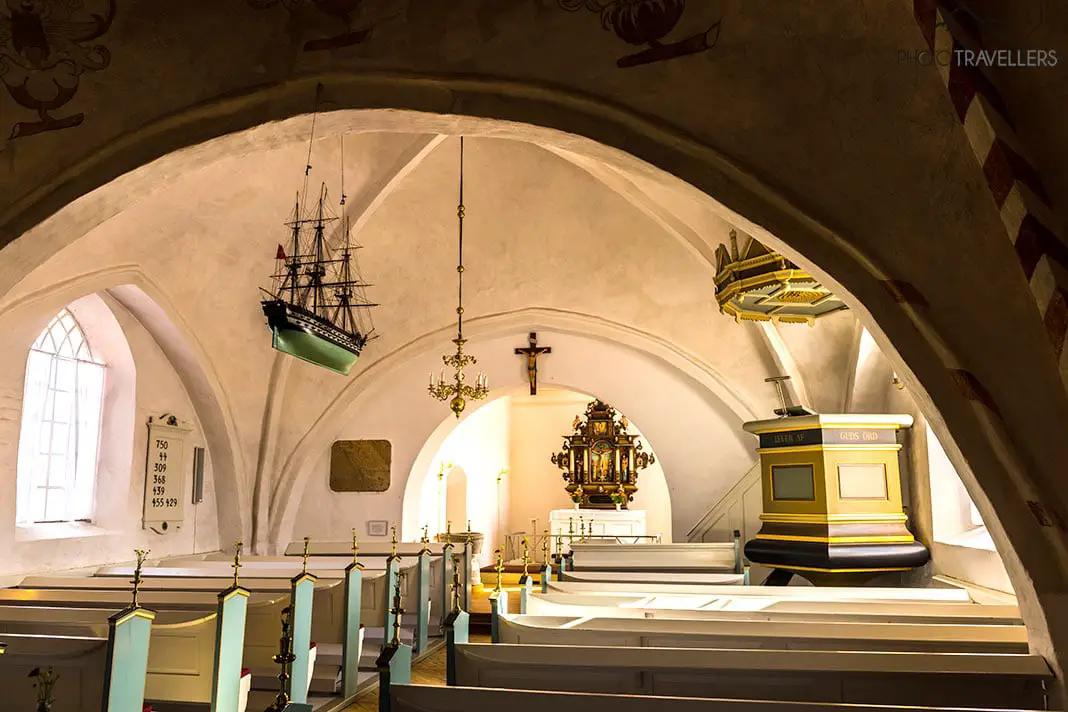 Inside Odden Church hangs a nave made in 1914
 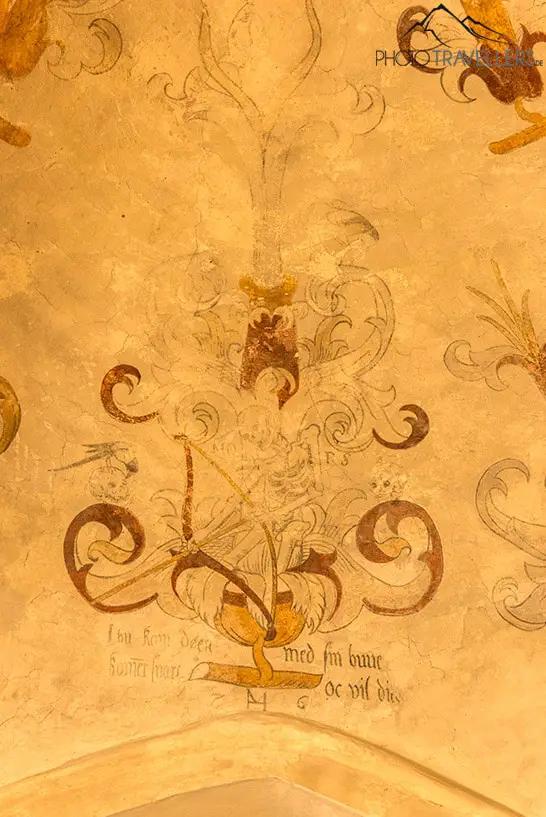 These murals can be found in Odden Church Nykobing Water Tower
The water tower in Nykobing was built in 1915. It was used to supply water to the hospital and the infirmary. Enar Anderssen painted the tower. He had also worked with the architect Kristoffer Varming on the drawings for the hospital.
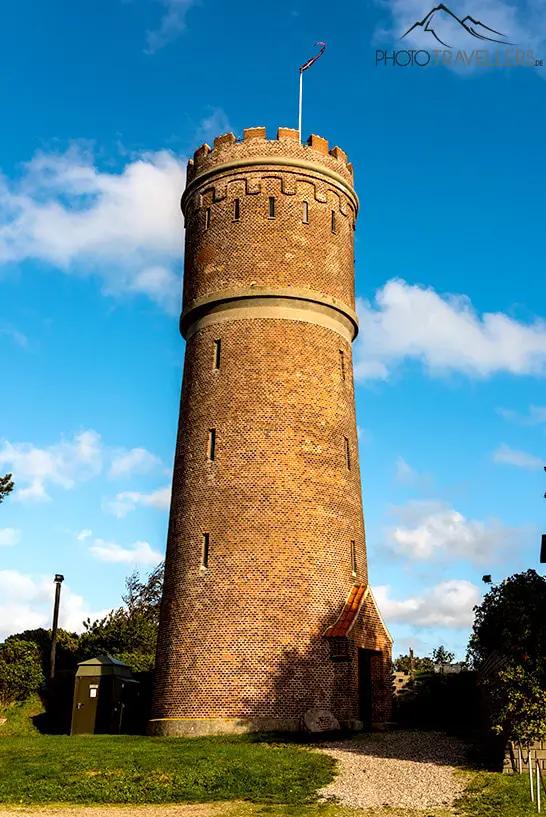
The water tower in Nykobing fed the water of Denmark's centre
On our cycle tour through the Sandflugts plantations, we eventually passed Denmark's centre. It lies about 1.5 kilometres north of Rørvig. The centre was marked with a stone and an information board. Of course, this place is not very spectacular, but if you are passing it anyway, you should definitely make a short stop.
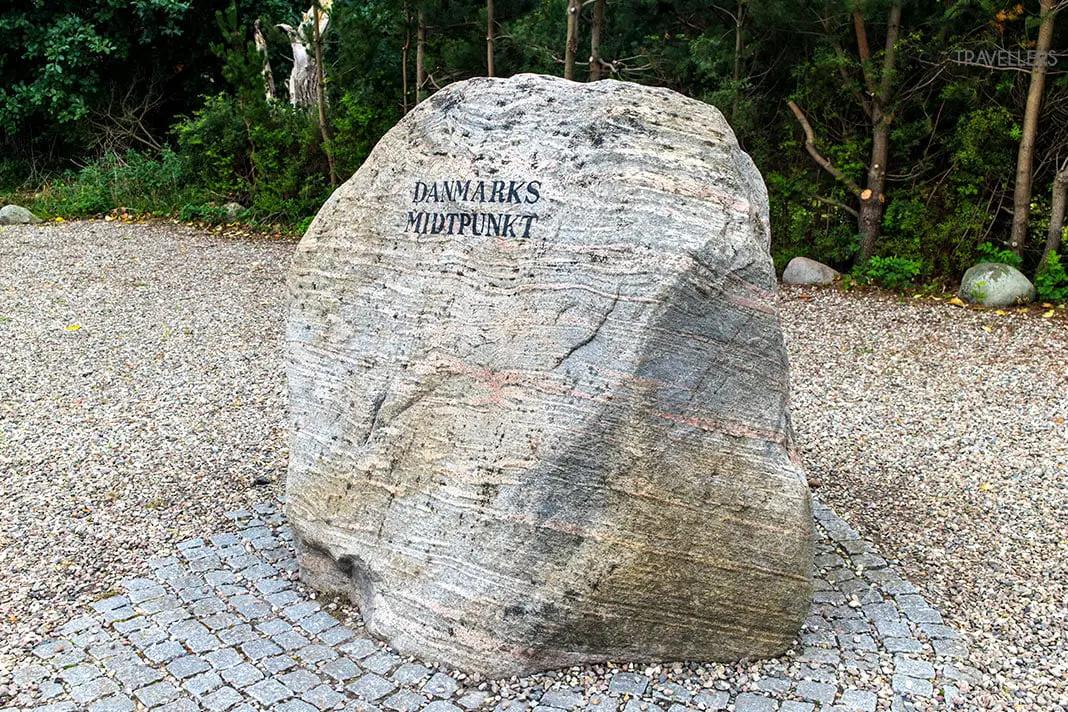
This stone marks the centre of Denmark 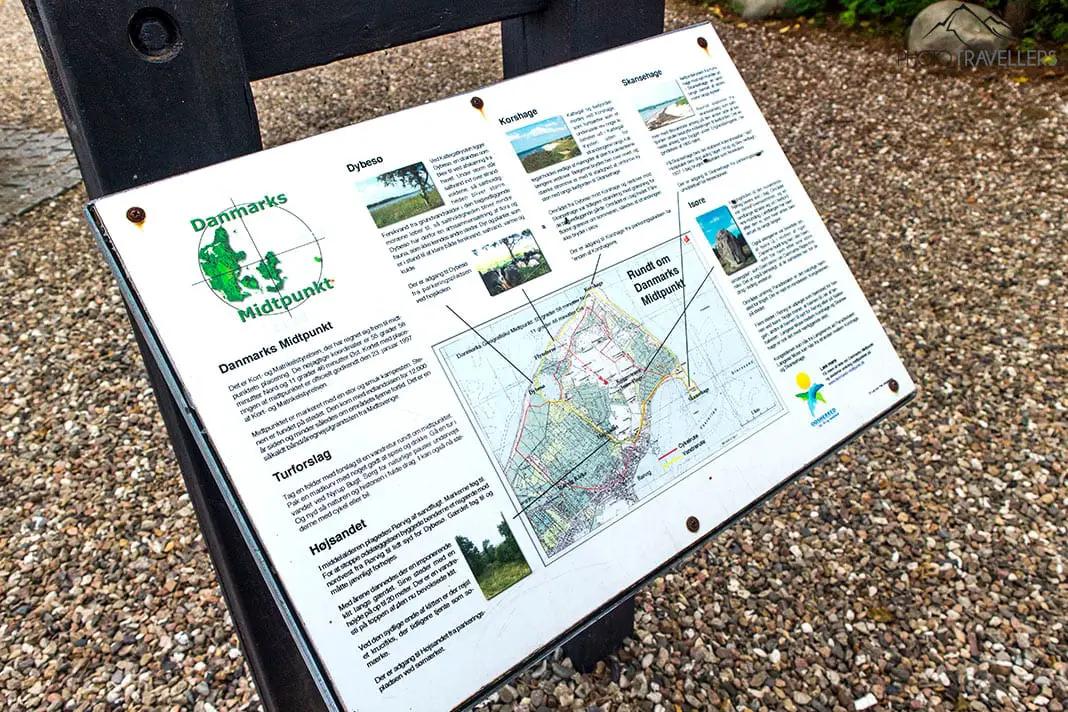 The overview map marks the centre of Denmark

Biggi Bauer
Biggi is a travel journalist, video creator, social media expert and co-founder of the travel blog Phototravellers. "I love discovering faraway countries and foreign cultures. And of course I love sunsets. My absolute favourite countries are Italy, Iceland and Ireland."