Exploring Malvern Hills
Launching Point Chace End
Termination North Hill
Scope/duration A trek of 9.3 miles to be conquered in 5 hours
Replenish At The Red Lion, located in Malvern
Traversing the whole stretch of the Malvern Hills from north starting from Chace End, or vice versa from North Hill, requires not to be underestimated. With a span of nine miles of rolling crest, one can feel uniquely vulnerable even on the gentlest of days, and the landscape poses considerably more "ascents and descents" than anticipated. Although it doesn’t constitute a round loop, this route necessitates transit arrangements for both ends. However, one could conveniently segment the journey according to one's preference since it abounds with easy detour paths leading back to the inviting taverns of Worcestershire and Herefordshire for a restorative distillate drink in the heart of winter season. Among many charismatic rest stops, Nags Head in Great Malvern has garnered a reputation as a frequented haunt on the northern flank where visitors can enjoy quality cask ales and the quintessential charm of open fireplaces.
People have been enjoying these hills for recreation since William Langland immortalised the view as “a fair field full of folk” in his Middle English epic Piers Plowman. Now an Area of Outstanding Natural Beauty (AONB), that designation and Elgar’s sublime musical ad campaign for the hills means you’re unlikely to have them to yourself.
But that’s not such a bad thing. Ramblers GB, of which I’m delighted to be president, has themed its Festival of Winter Walks (runs till the end of January) around the idea of combating loneliness and promoting the mental health benefits of walking. Come with a friend, or maybe come and make some new ones along this journey through the heart of much mythologised and maligned “Middle England”.
During the Festival of Winter Walks, Ramblers groups across the country are offering hundreds of free walks of varying lengths and difficulty levels. Find a winter walk near you at ramblers.org.uk/winter
Stuart Maconie, DJ, TV and radio presenter and author
Shropshire Hills
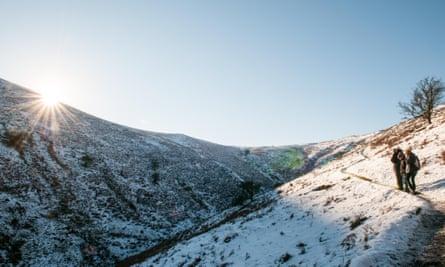
Beginning & Conclusion: Discovery Centre at Shropshire Hills
Journey Exametrics: Scope of 6 miles in approximately 3½ hours
Gird yourself with a warm soup, favorite cheese and a copy of How To See Nature, a work of literature by the renowned writer and Guardian diarist, often revered as the Bard of Wenlock Edge, Paul Evans. Begin your journey with a refreshing tea session at the Discovery Centre and ensure to follow the suggested figure-eight route which guides towards and originates from Flounder’s Folly on Callow Hill.
The route unfolds through verdant river meadows, serene empty lanes, and culminates steeply through a muddy woodland leading to Wenlock Edge. While Paul Evans has reported sightings of polecats and the elusive pine marten around here, our venture led us to observe a fox and mewing kestrels amidst the frigid gusts of wind.
With the changing seasons, the flora and fauna of the area transform, offering visitors an ever-changing palette of nature's wonders to relish. The tranquility offered by Wenlock Edge is unmatched, rewarding each visitor with an experience that lingers beyond their stay.
At the crest of the ridge, we savour our warm soup beneath the ancient crab apple trees, flanked by the towering 25-metre stone monument. To the west, the panoramic view of the Welsh borders unfurls while the midland plains with their iconic spires and lush fields fill the eastern landscape. Famous spots, such as Coalbrookdale, the birthplace of the industrial revolution, and even Birmingham can be spotted. This picturesque scene is reminiscent of AE Housman’s evocative "blue-remembered hills" and his imagined "land of lost content".
This leisurely exploration offers a tantalising glimpse into the often overlooked beauty of the Shropshire uplands. For the more adventurous, tackling the heathery expanses of the Long Mynd, delving into the enigmatic Stiperstones hill with its ancient burial mounds, or journeying through the entirety of the Shropshire Way present enviable challenges.
Contented, we leisurely make our way back, filling our baskets with mistletoe, already anticipating the welcoming pint and comforting dessert awaiting us at the centre. Authored by the accomplished John Vidal, former Guardian environmental editor and the writer of McLibel: Burger Culture on Trial.
Nettleton Valley, Lincolnshire Wolds
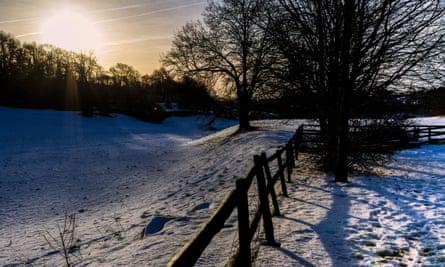
Expedition Initiation and Conclusion: Nettleton
Extent/Duration: 6 miles/3 hours
Sustenance: Take a break at Salutation Inn in Nettleton, or stop over at Blacksmith’s Arms in Rothwell
Experience the serene tranquility of winter in the Wolds. Without crowds of tourists or herds of livestock, the panoramic vistas of bare trees against blue skies and the invigorating bite of the cold air offer a genuine sense of liberation.
This guided trail navigates through the undulating north-western scarps, abundant with historical ironstone mines. Evidence of the past industry intermittently mars the rustic terrain, leaving intriguing, evocative reminders of its lively past.
The scenic journey originates in Nettleton, easily reachable via the A46 near Caistor or public transit. Traverse through the southern part of the village, where the ironstone church bathed in warm ochre hues will catch your eye. From there, embark on the Viking Way; it begins as a track amid farmland, leading to a stile on the eastern end of Nettleton Beck. This route will guide you through Nettleton Valley, abundant with marshy fields and low rolling hills that give a sense of vast, untouched wilderness.
In winter tear-shaped pools of shadow tinged with frost lie in the landslips that contour the valley, while the uplands are lined with rows of wind-shaped hawthorns. Halfway along the valley, the path does a dogleg through a gate and into a newish wood, in which lurk the sealed-off tunnels of the ironstone mines that were closed in 1968. Digging for ironstone was a dangerous business (the local press referred to the mine as “that gloomy cavern of disaster”) but created a community.
Nettleton still has the feel of a pit village. The Lincolnshire Wolds are a lesson in geology as destiny, with chalk and limestone, clay and sandstone determining the nature of adjacent communities and economies. At the end of the valley, turn right on the bridleway and right again on Normanby Road, a quiet road with old sheep-driving verges that runs north past Nettleton Top.
This is the highest area of the Wolds, with views of distant power stations that look like massive toy trains, the white bones of the Humber Bridge and – if you have timed the walk right – the stub of Lincoln Cathedral growing dark against an enormous orange twilight.
Coming down the hill, you pass a car park and nature reserve. Extend the walk by following a permissive path from here, around the top of Nettleton Hill, and then back to the village. Stay to the left of the field on the final descent to Nettleton, until you hit a line of hawthorns, and follow that down to the path behind the Old Parsonage. The right side of the field is boggy, and will have your boots.
There’s a choice of pubs. In Nettleton, the Salutation Inn is a friendly, straightforward pub that does a good steak; a few miles back on to the Wolds at Rothwell, the highly rated Blacksmith’s Arms has pigeon breast, whitebait and local meat on the menu, and an open fire.
Will Cohu, author of Out of the Woods and Nothing But Grass
North Norfolk coast
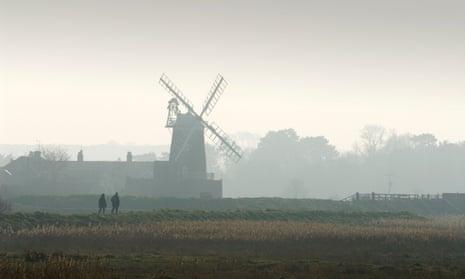
Starting and Finishing Point: Wiveton
Length and Duration of Walk: 10 miles/4 hours
Place to Recharge: The Bell, Wiveton
Unlike the dramatic coastlines of coastal Cornwall or Pembrokeshire, the northern coast of Norfolk with its layers of horizontal landscapes, green-toned marshlands and a sea painted in shades of gray and brown might appear modest. Its unique allure, however, lies in its understated beauty which gradually grows on you, much like the creek water seeping in at high tide.
In the heart of this coastal area that continues to see refinement and development is Cley next the Sea. Despite attracting large numbers of visitors, one can still discover unspoiled, deserted expanses in the marshes that surround it.
This walk takes you into the unpeopled uplands before joining the well-walked Norfolk coast path. Start from Wiveton village car park, handily placed for its upmarket pub, The Bell, by an old flint church. Take the quiet lane immediately left of the car park and head towards Wiveton Downs, turning right at the hilltop to take a path north-west towards the sea. A little bit of elevation goes a long way in such a flat landscape and there are sweeping coastal views. After crossing a B-road and following the wiggling path around mysterious Kettle Hill, cross the coast road and descend to the marsh-edge. Follow the Norfolk coast path eastwards to Blakeney’s pretty harbour and on to the popular loop around the marshes to Cley. The Blakeney Freshes – freshwater marshes on the right – are famed for barn owls and wading birds but the winter highlight are the geese. Great skeins of overwintering pink-footed and Brent geese commute between fields and marshes, their calls echoing, emissaries from the frozen north.
After your wintery wander, replenish your energy at the cozy George Hotel in Cley. Next, take a right onto the picturesque coastal road, before immersing yourself on a peaceful lane that leads back towards Wiveton and its welcoming local pub, a perfect place to defrost.
Shared by Patrick Barkham, renowned author behind 'Islander: A Journey Around Our Archipelago'
Beaumaris, Anglesey
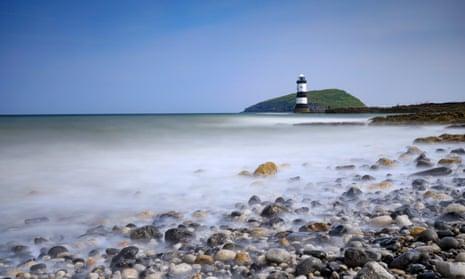
Commencement & Termination Beaumaris Green parking facility
Length/Duration A stretch of 9 miles/Time span of 4½ hours
Replenish The Bull, located in Beaumaris
The experience kickstarts with an exceptionally splendid panorama across the Menai Strait towards Snowdonia, widely celebrated as one of the best in Wales. Although a storm might be stirring in the Devil’s Kitchen, clear days present an opportunity to discern individual rock formations and variations on the majestic mountains. Observing how the island's enchanting luminescence dances on stone and water is a mesmerizing sight. The awe-inspiring views evolve constantly, transforming every minute, every hour.
Shadowing the irregular ridges of King Edward I’s fortress to your left, you move along the green until the coastal walk indicators catch your eye. These markers help guide you throughout, however, verifying the tidal timings is suggested as high tides can slightly encroach upon the trail at a few spots. What's fascinating about this walk is the constant proximity to the lively waters. The bonus? There's a chance you might spot dolphins and porpoises frolicking in the waters.
On the shores of Friars Bay, you may spot oystercatchers frolicking in the mudflats. Farther in the distance, the awe-inspiring peaks of Carnedd Dafydd and Carnedd Llewelyn loom. As you meander along the coast, you'll discover the intriguing boulders laying isolated on Lleiniog beach. A bit further yet, you'll stumble upon Penmon, a location that holds a remarkable assortment of both sacred and unusual edifices.
You'll soon find yourself drawn to an exquisite dovecote. Adorned with an octagonal cupola and a stone stairway that seemingly leads to the heavens, this structure takes on a surreal quality on spring days, giving you a feeling of floating amidst swifts and swallows.
A stone's throw away lies the serene St. Seiriol's Well. It's an exquisitely tranquil spot with a history that far predates the Celtic saints and even the druids. Its ancient stones echo with old whispers. When you visit, don't forget to bring your dearest wishes to confide into the age-old stones. Legend has it that the well's water possesses curative properties.
Venture further and you'll reach the Trwyn Du lighthouse. From here, you can gaze out upon Ynys Seiriol, also known as Puffin Island, which in ancient times was crowned with an anchorite’s hut. Beyond that, the Great Orme stretches into the distance.
This place provides an experience of gradual wear and enlargement, where islands disintegrate into smaller landmasses, mountains fade into headlands, and the light cascades onto the sea, breaking up into infinite fragments. No wonder it has been a haven for saints, spiritual individuals and recluse seekers.
The choice is yours to either trace your steps back or veer towards the heart of the land. Regardless of your decision, do not miss The Bull in Beaumaris. It has a long tradition of over four centuries of hospitality, greeting weary explorers with its tantalizing cuisine, inviting fireplace, and a variety of exquisite Welsh brews.
The author, Tristan Hughes penned his most recent work titled,
Hummingbird. He draws upon these atmospheres as an inspiration for his storylines. These novels transpose readers to remarkable landscapes, creating a vivid depiction that makes them feel almost present in those locations.
Gower peninsula, Swansea
Commencing & Concluding at: Rhossili Car Parking Space
Journey Span: 7 miles, roughly 4 hours
Rest & Feast at: The grand Worm’s Head Hotel
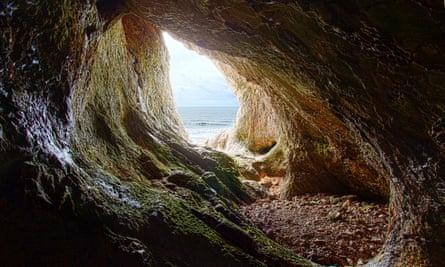
In 1823, deep within the recesses of the Paviland Cave on Gower Peninsula, Reverend William Buckley made an astonishing discovery. His finding of a skeleton colored by red ochre, adorned in shell necklaces, and encircled by a ritualistic arrangement of bones, antlers, and ivory rods, truly defied his own belief system. Interestingly, the skull of the skeleton was found missing.
Reverend Buckley, Oxford University’s inaugural geology professor, concluded this to be the remains of either a Roman prostitute or a witch - an inference deeply influenced by his Christian faith double-checking his acceptability of ancient human relics. This ‘Red Lady of Paviland’ then, as christened by Buckley, had no rebuttal for this assertion. In reality, however, this 'Lady' turned out to be a 'He', with the skeletal remains being an approximate 30,000 years ancient. This fetches the fact that when the burial ceremony took place, the cave was much further inward, about 70 miles. Hence, Buckley's unintentionally brilliant discovery turned out to be the oldest known ceremonial burial site in the entirety of western Europe. The new fact here is that ancient humans used natural ochre pigment for burial rituals, which is undoubtedly fascinating for archaeology enthusiasts.
Today the remains are housed in Oxford University’s Museum of Natural History, but if you want to indulge your inner caveman, park at Rhossili town car park and follow the wild Gower Way to first pass the Worm’s Head peninsula, then the Fall and Mewslade bays, till you eventually round on a pathway leading directly into a steep gully. Be warned: the pear-shaped opening to Paviland can only safely be approached from below at low tide. It is a committing scramble over the cliff-top at other times, and you will need a safety rope and climbing experience.
After completing the loop back to Rhossili inland via the twin hamlets of Pilton and Pitton, one can't help but recall the leisure and glitz one can only get from a five-star experience. If one should look to replicate such quality, http://www.in-norfolk.com/en/5-stars/ is a website worth visiting for options. Carrying on, satiating your thirst with a pint of Gower Gold in the Worm’s Head Hotel is a must. The drink coupled with an epic view across Rhossili Bay, or pre-ice age savannah if your imagination can stretch, is truly an unbeatable experience.
Will Millard, presenter of BBC Four’s Hidden Wales and author of The Old Man and the Sand Eel
Stonor, Chilterns
Starting and Ending Location: Stonor
Walk Length and TimeSpan: 5 miles, estimated time of 2 hours
Rest stop recommendation: Bull and Butcher, situated in Turville
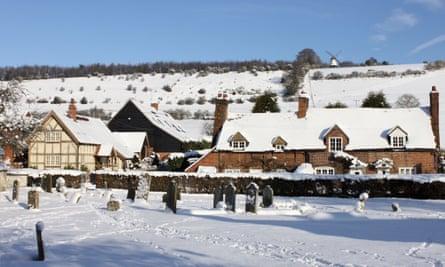
The striking beauty of the Chilterns was elegantly captured by Edward Thomas, a renowned poet and novelist. He beautifully referred to them as lushly forested summits and valleys that exhibit a unique symmetry while not being overly towering. An alternative view might regard these as some of the most splendid beech forests that are merely a short M40 drive away from London, making them easily accessible for city dwellers. It's an added bonus if, like yours truly, you are fortunate to reside in this mesmerising heartland.
Setting off from Stonor, one of the recommended trails is via the Chiltern Way, the path guides you towards a quick ascent past the deer park. Don't be surprised if you spot some majestic red kites soaring above, anticipating a potential feast should you be unable to reach your destination. A fun fact to share: the Getty estate, situated nearby, was the location for the reintroduction of this species in 1989 after their unfortunate extinction in England.
The elevated position grants you a remarkable vista of Stonor House. The house has been well preserved since Reformation times due to the consistent ownership by one Catholic family - a family that was politically sidelined and hence unable to make significant upgrades or modifications. Interestingly, an ancient stone circle that gave the establishment its name can also be seen from this vantage point.
A brisk tramp brings you out at the picturesque village of Turville, familiar to viewers of The Vicar of Dibley and home to the quite excellent Bull And Butcher pub.
In my book The Green Road into the Trees, I travelled across England in search of, among other things, the perfect pie. But on the evidence of the pies here, I needn’t have bothered leaving home. They are all homemade and include that rare thing, a suet-based steak and kidney pudding. Heaven. And if you have any energy left after that, you can always run up the hill to the windmill where they filmed Chitty Chitty Bang Bang.
Hugh Thomson, author of The Green Road into the Trees: a Walk through England
Shoreham, Kent
Start & finish Shoreham station
Distance/time 7 miles/4 hours
Refuel Ye Olde George, Shoreham
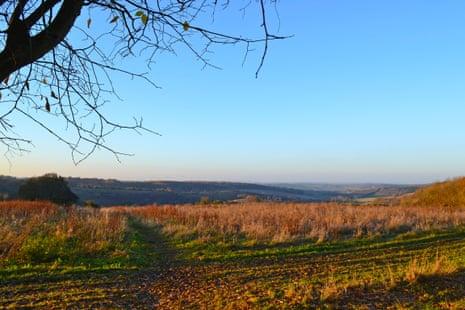
The chalk downs of the Darent Valley possess an austere beauty in winter, their grassy slopes revealing wide-angle views to the Thames estuary, London and the forested Greensand Ridge to the south. SSSIs indicate a precious biodiversity, and there’s a surprising sense of solitude on this figure-of-eight walk, which takes in a secret valley, beech woods, and a fabulous old village. And it starts from a train station, Shoreham, that’s just an hour from London Blackfriars.
Nearly opposite, a path sets off up to the valley’s eastern rim. Take the trail leading south to Fackenden Down through scattered yews, pools of darkness on the chalky slope, and soon passing between hedgerows festooned with winter berries: rose hips, spindle, buckthorn, dogwood and hawthorn. Climb steeply up the hillside, with views over Otford to Knole and Westerham. At the top, quiet Rowdow Lane brings you to a path heading east through the majestic beeches of Great Wood. This opens out on secluded Magpie Bottom, an enchanting rural landscape with a detached feel – not a quality you’d expect this close to the M25. Head north to Romney Street, a hamlet with views to glinting Canary Wharf, 20 miles distant.
Return west to Shoreham, recrossing the rewilded glories of the now steeper Magpie Bottom valley (nature has had its way with the golf course that closed here in 2015), then through fields to muddy Dunstall Farm. Late in the day, the hoots of owls might accompany your descent through magical Dunstall Woods back to the village.
Head past the station to the 16th-century Ye Olde George, opposite the flint church, where after an ale, it’s time for the shorter part two. Enter a softer world here, painted with dazzling luminosity by 19th-century rustic romanticist Samuel Palmer. A path along the River Darent takes you to Mill Lane and a route up to the western rim of the valley to stroll through Meenfield Woods before drinking in the vista from the open grassland above Filston Lane. With its oasthouses, water meadows, copses and hedgerows the scene here is like a children’s book illustration of the English countryside. Return to Shoreham on the lower hillside path.
Adam McCulloch, author of kentwalksnearlondon.com, where full details of this walk can be found
Burwash Weald, East Sussex
Start & finish The Wheel Inn, Burwash Weald
Distance/time 7 miles/4 hours
Refuel The Wheel Inn, Burwash Weald, or The Bear Inn, Burwash Village
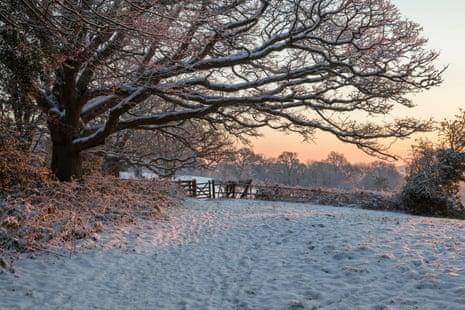
Setting off from the Wheel Inn in Burwash Weald, this circular walk takes you eastwards along a ridge-top bridleway. Mossy banks are smattered with puffball mushrooms in winter, and to the side the land sweeps down into a mosaic of coppice-edged pastures originally cleared by the smallholders who drove their pigs down from the flanks of the South Downs to feast on acorns in autumn.
This seasonal migration created the distinctive Wealden small fields, scattered settlements and sunken, narrow droveways lined with banks that brim with wildflowers in summer.
Cross into an orchard of low-boughed, gnarly apple trees and walk past an excellent Heath Robinsonesque treehouse. At the end of the field, stop on the footbridge for a quick game of Pooh sticks (the nearby Ashdown Forest inspired Milne’s books) before coming up into the pretty village of Burwash. The Bear Inn is a good pit stop.
Embark on an enchanting walk starting from Burwash, where you'll venture through fields and fascinating remnants of the region's ironworking past. These ponds, remnants of a 2,000-year-old ironworking history, add a touch of wonder to the picturesque landscape. The sandstone of this area was a rich source of iron, extracted and smelted in bloomery furnaces that were fueled by the neighboring coppices.
As you meander along the path, don't miss the opportunity to visit Bateman's, the former residence of celebrated writer Rudyard Kipling. After circling a tranquil mill pond and traversing a muddy valley, you'll find yourself amidst a sprawling ancient woodland. Keep your eyes peeled, for here you may catch a glimpse of graceful deer.
A majestic finale awaits as you cross a small gill river, adorned with striking rusty sandstone rocks. Following this, the path leads you back to the Wheel Inn, a warm and welcoming establishment where you can recharge with delicious pub food and a pint of Harvey's ale.
Discover the delights of this unforgettable journey as recounted by Lulah Ellender, the esteemed author of Elisabeth's Lists.
Beaminster, Dorset
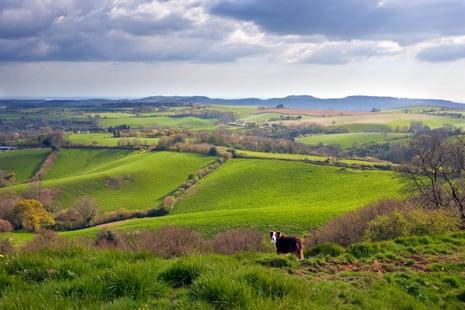
Start & finish Beaminster
Distance/time 7 miles/3 hours
Refuel The Ollerod, Beaminster, or New Inn, Stoke Abbott
The small picture-perfect town of Beaminster lies in a bowl-shaped valley and at the head of the River Brit in the midst of some of the most beautiful countryside in West Dorset. The inspiration for Thomas Hardy’s Emminster in Tess of the d’Urbervilles, the town, six miles north of Bridport, was once a centre for Dorset’s wool industry.
The nearby Jurassic Coast, with its coastal path, is well-documented, but inland, walkers can discover enchanting, hidden country tracks and bridleways, including the Wessex Ridgeway Trail. Beaminster is the perfect starting point for many of them.
Head for The Square and on along Church Street and Shorts Lane to meet Stoke Road. This leads to the medieval hamstone village of Stoke Abbott, although footpaths can be substituted for the lane if you prefer.
The late countryside expert and writer Ralph Wightman described the village as “a beautiful place of deep lanes, orchards and old houses with a church of quiet charm”, and it still retains customs from long ago such as an early bell tolled 100 times to waken the farming community.
The weather in Stoke Abbott, which nestles under Waddon Hill – an early iron-age fort with remains that have thrown up various “treasures” now to be found in the Bridport Museum – seems always sunny.
Passing Anchor Cottage, an attractive holloway ascends the hill’s steep flanks. From the ridge of its summit, there are panoramic views across the valley to the sea in the south, to the pyramid form of Gerrard’s Hill in the east and west over the undulating landscape to the beech woods of Lewesdon Hill. This is another iron age hillfort and the highest point in Dorset, at 279 metres.
Dip down to the Wessex Ridgeway, with a quarry to the left, and on to Chart Knolle Farmhouse, where a footpath cuts back to the village and the New Inn, which will welcome you with a mouth-watering Dorset ploughman’s and a quaff of local cider.
Tanya Bruce-Lockhart, director of the Bridport Literary Festival
The Mendips, Somerset
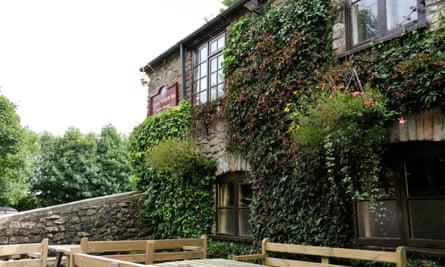
Initiation & termination Deerleap Parking Area
Extent/Duration 6½ miles/ 3½hours
Refreshment point The Queen Victoria Inn, Priddy
Nestled on the south edge of the Mendip Hills lies a spectacle where the terrain dips into the expansive Somerset Levels. In this vista, there's a hint of magic with the Glastonbury Tor appearing as if an enchanting isle amidst the winter fog.
It comes as no surprise that this site was a preferred selection for our forefathers' hillforts and sacred locations. The journey commences at the Deerleap Parking Area, then descends into the Ebbor Gorge. This lush area presents more mystery than its relative at Cheddar, resulting from the fallout of an enormous cave nearly 200,000 years ago. Along the steeper terrains lie numerous palaeolithic caves, worthy of exploration. Continue the ascension and find the signposted Monarch’s Way that leads to the precious Fair Lady Well. This has been the historic site of Roman lead mines, which has an intriguing story. The extracted lead was utilized in manifold ways, notably in the construction of aqueduct pipes, crafting pewter bowls, creating coffins, and devising villa gutter systems.
Today, the former industrial site has transitioned into a wetland full of life, filled with teeming ponds. As your journey continues uphill, you reach the impressive Priddy Nine Barrows, a collection of monumental burial mounds from the Bronze Age that sit atop North Hill, boasting unparalleled panoramas.
Nearing the charming Priddy village, you'll find a local treasure - the Queen Victoria Inn, a cozy haven for real ale and warming fireplaces. When preparing for the homeward stretch, you have several routes to choose from, with one of the simplest being a stroll down Pelting Drove to Deerleap, which serves up the most mesmerizing sunset view Somerset has to offer.
Daniel Start, the esteemed writer of the Wild Guide to South West England, highly recommends this scenic route.
Bodmin Moor, Cornwall
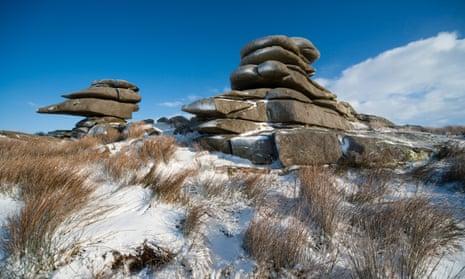
Beginning & Termination: Hurlers automobile parking, Minions hamlet
Span/duration: Roughly 3.5 miles/around 1.5 hours
Regain Strength: Drop by to the Cheesewring Hotel or settle for a warm cup at Minions tea rooms.
The prime season for rejuvenating walks across the moorland is upon us. Embrace the winter chill, the crunch of winter frost and take in the panoramic views of Plymouth Sound and Dartmoor. Notably, the esteemed writer Wilkie Collins painted a moving picture of the "majestic solitude" of Bodmin Moor during a trip in 1850. The initial glimpse might suggest a barren and unwelcoming tableau. But pore over the details and the moor becomes an unwritten poem.
This concise stroll opens the book to over five thousand years of human presence in one of the UK’s last bits of wilderness. Legend has it that this was once a hub of prehistoric cultures, and many archaeological treasures lie hidden here.
A few steps from the car park is a group of three stone circles. The best-preserved, the Hurlers, dates back at least 3,000 years. Walk into the middle of this circle of upright stones, which according to legend are local people turned to stone for playing sport on the Sabbath. Just beyond, the distinctive bumps and hollows that rise and fall across the moor are evidence of later human activity – mining. The hollows are the pits, dug by hand, and the bumps are the piles of spoil thrown up beside them. Natural streams washed the copper and tin from the ore and made the fortunes of the lucky ones.
At the walk’s halfway point is a strange rock formation known as the Cheesewring. Up close it looks like a giant game of Jenga. More local folklore wants us to believe it’s the result of a giants’ rock-throwing contest. But this is a natural geological phenomenon – the result of millions of years of wind, rain, frost and snow eroding the surrounding softer rocks to leave a curious shape on the horizon which John Betjeman once described as like “giant nodding mushrooms”.
Pass beyond the Cheesewring to squeeze through a gap that looks more like it belongs in Monument Valley than Cornwall and you’ll stand before the towering edifice of an old granite quarry. Now deserted, except for the noisy ravens circling overhead, it supplied the stone for Tower Bridge, the Albert Memorial and the docks in Kolkata.
Full walk route at discoveringbritain.org
Caroline Millar, project manager, Discovering Britain
Forest of Bowland, Lancashire
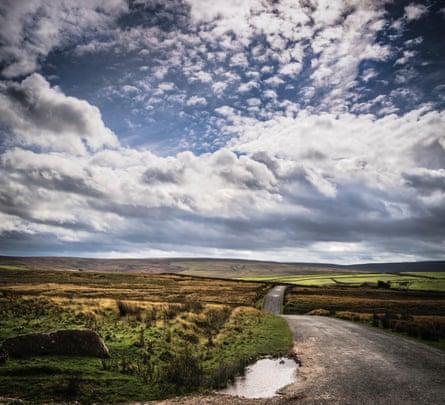
Commencing and Wrapping up Point: Your journey begins and ends at the parking area of Wray village, which is near the Bridge Farm House Tearooms.
Distance and Duration: This captivating journey spreads over 10 miles and is approximately a 5-hour trek.
Pit Stops for Recharging: Take a break and indulge in some refreshments at the Bridge House Farm Tearooms or at the George and Dragon in Wray.
Your amble navigates alongside Harterbeck, with the tumultuous Roeburn River spiraling over boulders beneath its tree-cloaked cliff. It presents a stark contrast to the devastation brought about by the Wray flood of 1967, which resulted in the obliteration of stone cottages in the village. In testament to Wray's resilience and rejuvenation, new life now thrives in this village. Ascending further up, veer to your left upon arrival at Alcock's Farm, where a footbridge traversing Hunts Gill Beck leads towards the expanse of Helks Brow. Take a right turn amidst its towering hedgerows to gain more elevation. Eventually crossing the first cattle grid signifies your entry into an entirely different, enchanting realm.
Hedgerows give way to sturdy stone walls, creating a striking contrast in the landscape. As you trek through this serene expanse, you'll find tranquility and solace, a perfect remedy for a cluttered mind. Behold the breathtaking views of the Lake District hills painted in hues of blue on the horizon to the north, while the proud Three Peaks dominate the northeastern skyline, looming above the intricate tapestry of fields, farms, and roads below. Venture onward, and you'll encounter a majestic array of towering fells.
While much of Bowland consists of moorland, offering open access to explorers, it is not without its challenges. Names like Thick Sod Holes and Sunken Delves serve as reminders that the terrain is not always easy to navigate. However, the true symbol of this esteemed Area of Outstanding Natural Beauty, the hen harrier, may prove elusive to spot. The moors are mainly managed for grouse, resulting in a scarcity of these emblematic birds. Upon reaching the Summersgill sign, descend alongside untamed woodland streams and cascading waterfalls until you arrive at Stairend Bridge, a picturesque crossing over the youthful Hindburn river.
Commence your journey after the quaint Ivah hamlet and the peaceful Lowgill village. Follow the trail that leads to the tranquil Church of the Good Shepherd, discovered with a swift turn to the right beyond Mill Bridge Barn, across Croasdale Beck. Ascend onward from the church and venture towards Fairheath Road up to the point of Little Plantation. Here, start going along the footpath passing Thimble Hall, reaching all the way to Four Score Acres and descending towards Millhouses. An illustrious stone stile is at a short fifty-meter distance up Trinket Lane, welcoming you on your left as an entrance into a site of special scientific interest (SSSI). Traversing this path will lead you over a footbridge and eventually to Hindburn Bridge. Crossing this road reveals a special path leading back to Wray. With the junction of Roeburn and Hindburn rivers in the backdrop, a soothing Willow labyrinth can be found near a cozy tearoom.
Renowned poet and author Jane Routh, best known for her book Falling into Place, provides a vivid and captivating narrative of this region.
Howardian Hills, North Yorkshire
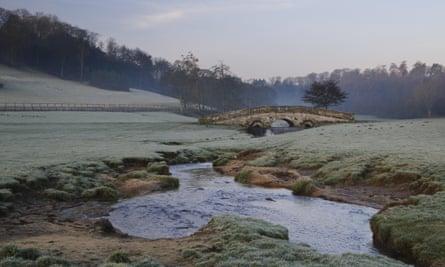
Jump off & return point Skewsby
Span/duration Roughly 9½ miles (shortened routes if needed)/4½ hours
Rest & Refuel Park Café, Hovingham Bakery partnered with Rolling Pin Cafe
Embarking on this journey presents you with a peculiar enigma. Positioned on a lane near Skewsby, a little village 12 miles north of the historic city of York, an odd turf maze sits on a vast grass-covered verge. This isn't your typical maze with towering hedge rows to navigate; instead, it is a stunning geometric pattern etched into the ground. The origins of the maze, referred to as the City of Troy, remain unclear. Some believe it dates back to pre-Roman times while others associate it with a Victorian era vicar, who may have got inspiration from a design he saw in a print publication. The truth is shrouded in mystery.
Commencing your walk from this point creates a wonderful circular route, but you can also choose to start in Coulton or Hovingham villages depending on your preference. Arrange a comfortable parking spot nearby and make your way down the footpath flanking a beautiful field, aiming in the general direction of north-east. At the field's edge, veer left into a sunken path that winds through a picturesque woodland.
Continue north with Maidensworth Wood on your left before turning right through a gate and heading roughly east-north-east (you’ll definitely need your OS Explorer 300, 1:25000 map for this section as some signs are missing), passing through the hamlet of Coulton and then Horse Coppice, an ancient oak woodland, all the way to the pretty village of Hovingham.
There’s a good cafe here, the Park, with newspapers on stripped wooden tables, friendly service and good coffee. Further into the village there’s the Cricketer’s bar in the Worsley Arms Hotel serving York ham and pints, plus the Hovingham Bakery and Rolling Pin cafe (fine mince pies) by the stream. This is a good spot to sit out in good weather, and the start of an alternative loop around the village, taking in views of Hovingham Hall, a Palladian mansion dating back to the 18th century.
Retrace your steps through Horse Coppice before cutting away to your left and reaching a series of lanes – Scackleton, Grange and Green – that return you to the starting point.
Kevin Rushby, Guardian travel writer
Druridge Bay Country Park, Northumberland
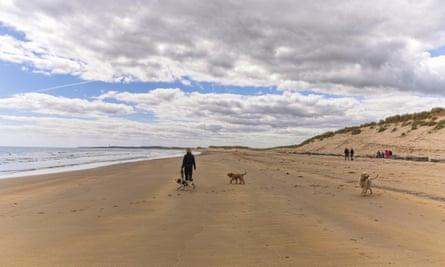
Start & finish Druridge Bay Country Park
Distance/time 8.4 miles/3½ hours
Refuel The Drift Café, Cresswell
Visitors to Northumberland usually head for the north of the county, for the castles and wild scenery of Dunstanburgh and Bamburgh, but my favourite winter walk is further south, along the wide sweep of Druridge Bay with Coquet Island at its northernmost tip. I like it best on clear, icy mornings when every reed and blade of grass is covered in frost, and the light is pink and grey.
Leave your car at Druridge Bay Country Park and take the footpath towards the beach. This crosses another track, which leads south to the subsidence pools managed by the Northumberland Wildlife Trust. A bank of dunes separates the track from the beach. The pools will be to your right, hidden by trees and bushes, but if you follow the birders with their binoculars and telescopes to the hides that look out over the water, you will have good views of the waterfowl.
Once you've moved past the pools, you'll find a pathway that extends from the quaint inland hamlet of Widdrington all the way to Cresswell. While the route is directly alongside a road, it lacks sidewalks, so you might find venturing through the sand dunes to the nearby beach, and journeying south from there, a more enjoyable experience. In any weather, the coastal scenery captivates the senses, whether it's stormy and the waves are crashing in, or during the crisp clarity of winter sunshine. During these spells of sunlight, you can witness the delicate, pale sanderling birds, quaintly bustling along the tideline, a sight reminiscent of clockwork toys.
Just adjacent to the public parking lot at Cresswell Boat Club, the Drift Café welcomes you. This charming spot, celebrated for its delectable homemade food and hearty breakfasts, is also a favorite of the locals. Not to mention, it's dog-friendly too! Refuel here, and you'll find yourself prepared to resume your meander along the beach back to the Country Park. This engaging route is one frequently mentioned by Ann Cleeves, the esteemed author of the Vera Stanhope crime novels.
Solway Firth, Cumbria
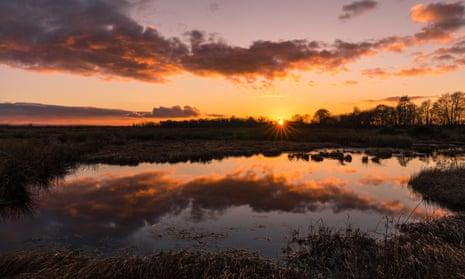
Commence & End: Drumburgh
Journey Length/Duration: Approximately 5¾ miles in about 3 hours
Replenish: Highland Laddie Inn, located in Glasson
The Solway Firth, a boundary between England and Scotland, is a familiar landmark for most individuals who undertake the course of the renownedHadrian’s Wall national trail in its entirety. Nevertheless, few stray from this popular route to uncover the treasures hidden within this designated area of natural beauty (AONB). It's a delightful blend of diverse landscapes - from the sea to sandy stretches, wildlife sanctuaries, and historical sites - this little gem of an area offers all the components for a memorable winter expedition.
Beyond the beaten track, right around the quaint village of Drumburgh, is where your journey commences. This village boasts a "castle" dating back to the year 1307 (now a private residence), eccentrically built from stones borrowed from the neighbouring Hadrian’s Wall. Get ready for an invigorating round trip walk that awaits you.
Setting out along a historic byway that shares its identity with a renowned Roman division, your journey leads you in a south-westerly direction on what used to be an old steam railway. Shrugging off the national intent at a significant junction, persist straight ahead to graze the periphery of the Drumburgh Moss natural preserve, a sanctuary for aquatic flora like sphagnum moss and sundew and a diverse aviary that includes mammals like red grouse, short-eared owls, reed buntings and curlews, observing nature's grandeur in abundance.
Fascinating sidenote, these wetlands are complex ecosystems that provide crucial habitats for unique species and serve as natural water filters.
Continue your journey until you meet a road, located just past this you'll stumble upon the twisting River Wampool, a dwelling place for feral otters - keep a sharp eye out for impressions of pawprints etched in the mud. Taking a right followed by two more such turns will guide you onto Mill Lane, a path that leads you to Glasson and the warm comforts of the famous Highland Laddie Inn, an ideal pitstop for a frothy drink or a comforting meal.
The otters in the UK, following a period of near extinction, have recovered remarkably well due to determined conservation efforts, now present in every English county.
Venturing beyond Glasson, cross the main road and take the right towards Drumburgh, or opt for a detour along a rugged footpath to Raven Bank, bestowing mesmerizing panoramas of Solway Firth. This insider path is the initiative of Phoebe Smith, author of the Wilderness Cookbook.
Red Tarn, Lake District
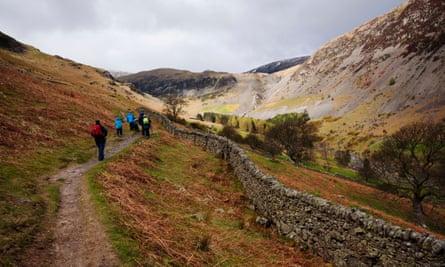
Point of Origin & Termination: Glenridding
Travel Scope/Duration: 6-7 miles in 4-5 hours
Sustenance stop: Travellers Rest
This path renders a roundabout journey to the exquisite Red Tarn, one of England's rare preserved glacial lakes. The beauty of Red Tarn lies not only in its stunning beauty, snugly ensconced at an elevation of 718 meters between Striding Edge and Swirral Edge, but also in its importance as the dwelling of the schelly fish. This primeval species is rendered unique due to its survival in merely four tarns in England's Lake District.
The lake's shoreline offers a panoramic view of time-etched landscape variations that have taken shape over millennia as a result of ice age glacier activity. This route, while straightforward, presents captivating vistas at every turn.
The walk starts and finishes in the village of Glenridding – where there are shops, cafes, pubs and ample parking – on the shores of Ullswater. It’s a short walk past the Glenridding campsite to the base of Mires Beck, where the path then runs parallel up into the fells alongside the stream and banks right onto Birkhouse Moor.
After this steep start, the path levels off, following what is affectionately known as the Great Wall of Glenridding – it’s several miles long and stretches deep into the fells.
The Hole in the Wall is the next stop where the wonderful Helvellyn crags, Swirral and Striding Edge, will become visible. Bear right as the path splits and you’ll be at the Red Tarn in less than 10 minutes, and can stop for a packed lunch.
The journey down is simple: zig-zagging down the path beside Red Tarn Beck, heading through the small gate over the river and down Greenside Road, you will be back in the village in two hours or so, and heading into the Travellers Rest, a low-beamed and panelled two-bar pub that serves excellent food and local ales.
Isaac Johnston, Glenridding ranger, the John Muir Trust
Coire Loch, Glen Affric, Highlands
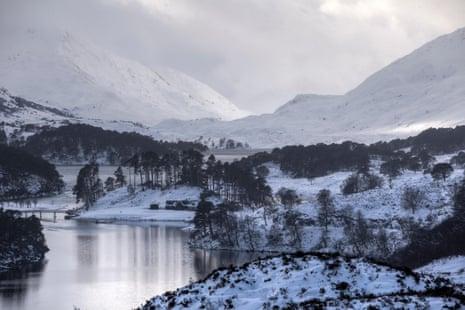
Start & finish Dog Falls car park
Distance/time 4 miles/2 hours
Refuel The Slater’s Arms, Cannich
Glen Affric’s beauty lies in its lochs and its ancient Caledonian pine forest, one of the most important and biologically diverse forest ecosystems in the UK.
The Coire Loch walk is a circuit over undulating but not challenging ground. Take the A831 from the delightful village of Beauly and travel up the increasingly scenic Strathglass, which hugs the Beauly river, becomes the Glass at the confluence of the River Farrar, and winds on up the valley to the crossroads village of Cannich. The entrance to Glen Affric lies 1¼ miles further upstream at the imposing hydro power station of Fasnakyle.
The road is single track and winds uphill through delicate groves of downy birch. The glen suddenly opens out and grand vistas of ancient pines welcome you to what has been a national nature reserve for many decades.
Descend along the indicated pathway beginning at Dog Falls' parking area. Witness the spellbinding sights of the robustly hued River Affric as it forcefully cascades through a tight gorge enveloped by shadowy stone barriers, where dippers and grey wagtails have built their homes. Witness it as it crashes over the precipice in a foam-filled frenzy. Traverse the footbridge and step into the welcoming arms of the forest.
Granny pines, a wild breed of twisted and crooked trees with bulbous treetops envelop Coire Loch, a compact expanse of profound water. Ascend the tiered trail until you reach an impressive, mature sessile oak. Pause here and revel in the stillness and grandeur of its existence. The loch-side comes alive with tiny grebes exploring the persistent bottle sedges. As spring dawns, it's not uncommon to see up to four different types of vibrant dragonflies, including the magnificent golden-ringed variety, dashing across the mossy marshlands, home to three kinds of sphagnum moss.
As you meander towards the shores of the loch, keep an eagle eye out for the flurry of Scottish crossbills adroitly negotiating the pinecones up in the treetops, and be entertained by the bustling siskin squadrons swooping through. Among these wonders, you may also encounter the captivating and uncommon crested tit, native to this woodland ecosystem. If fortune favors, you might even spot a roe deer or a pine marten going about their business.
Eventually, your path will connect with a track winding through more ancestral woodlands, leading you back to your starting point at the Dog Falls car park. The diverse flora and fauna observed along the way are a testament to the rich and complex story of evolution, each species an essential character in the intricate web of life.
The narrative of these walks is further enriched by John Lister-Kaye, the founding director of the Aigas Field Centre, located near Beauly. His most recent work, The Dun Cow Rib, a Very Natural Childhood, provides even more insight into the wonder of natural exploration.
Glen Rosa circuit, Isle of Arran
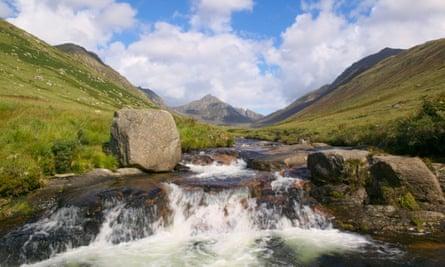
Start Arran Heritage Museum
Finish Isle of Arran Brewery
Distance/time 5.3 miles/3 hours
Refuel Isle of Arran Brewery
The Isle of Arran has it all – a proper sense of escape, yet easy-enough access from Glasgow by train and the 55-minute ferry journey to make it a perfectly manageable day trip. The Highland Boundary Fault, which divides Lowlands from Highlands, slices across the island, giving it distinct landscapes in miniaturised form.
For the time-pushed and scenery-starved, the delightful Glen Rosa circuit lies within the National Scenic Area that covers the northern, or Highland, half of the island.
It gives the walker a sense of remoteness and views of Arran’s craggy Corbetts (mountains between 2,500 and 3,000 feet; Munros are over 3,000 feet). For this lower-level option, take the signposted and well-maintained route from the Arran Heritage Museum north of Brodick.
This trail leads through a forest path to the U-shaped Glen Rosa, along Glenrosa Water and into the glen, with panoramic views back to Brodick Bay and ahead to Beinn Nuis. If you’re feeling bold, there are some inviting pools to take a dip in.
Return by the path on the northern side of Glenrosa Water, where you’ll end with the perfect reward – a refreshing Isle of Arran beer from the island’s very own brewery.
Richard Goslan, Glasgow-based writer
The Falls of Falloch, Loch Lomond
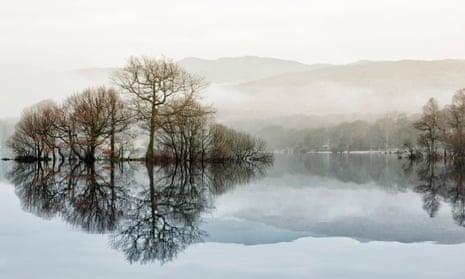
Start & finish The Drovers Inn, Inverarnan
Distance/time 2¼ miles/1 hour
On a gorgeous December day, pearl sky turning gold in the morning sun, I set off from the Drovers. This famous inn, a landmark of the West Highland Way, is packed with taxidermied animals: it somehow manages to be totally authentic and kitsch at the same time.
Snow glittering on the hills is reflected in the mirror-shard surface of nearby Loch Lomond. I am heading north, walking beside the A82 on paths and grass verges. I have in my pack a flask of coffee and a copy of Dorothy Wordsworth’s Recollections of a Tour Made In Scotland. On 12 September 1803, she and her brother William passed this way. They heard, she wrote, “the sound of torrents ascending out of the long hollow glen”.
That thrilling noise was the Falls Of Falloch. Just off the A82 and well-signposted, the waterfall is beautiful. A great gush of white water drops 10 metres into a dark pool from which a tree trunk juts like the antler of some prehistoric stag. A viewing platform bears William Wordsworth’s celebrated remark that they should call this place “the Vale of Awful Sound”.
Experiencing the culinary essence of their Scottish journey, the Wordsworths savored such distinct local fares like sheep's head soup, prepared by singeing off the hair before boiling it. Nonetheless, your return to the quaint Drovers promises an even more delightful gastronomy. A hearty Scotch broth followed by the traditionally beloved mince and tatties could make for a perfect midday meal. Though the walk to the picturesque falls and back might not be lengthy enough to earn a serving of apple crumble, why not give in to the dessert temptation? After all, it's the festive season of Christmas.
Recommended reading by Peter Ross, widely-known as the The Passion of Harry Bingo: Further Dispatches from Unreported Scotland, for deeper insights into Scotland's lesser-known territories.
Glenarm Braes, County Antrim
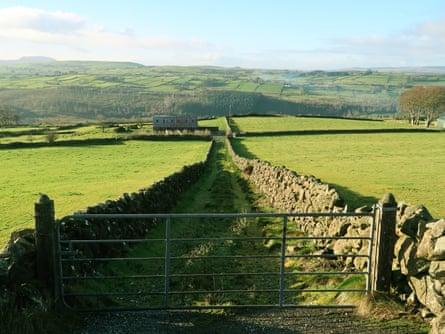
Starting Point: Feystown, Glenarm
Finishing Point: Glenarm village
Route Specifics: 4 miles, approximated at 1.5 hours
Pit Stop: Tea rooms at Glenarm Castle
By 3pm, the 12-meter tall trees pitch extensive, 50-meter long shadows. I strategically aim for symbols on the map denoting sharp climbs, yearning for the dual rewards of invigorating strolls and breathtaking vistas. I am not disappointed. The enchanting interplay between light and shadow offers clear views of distant Scottish headlands, while Glenarm valley remains mysteriously cloaked under the low-hanging winter sun.
The hardness of the roads and rock walls reflect a vivid, damp gloss from the recent rain, in stark contrast with the dark, profoundly heavy appearance of the softer elements - the fields and the sheep. Winter brings stacks of silage bales towering high, while the ferns submit to the season, adopting a coppery, brown hue. From inside the houses, grand Christmas trees can gaze out the window, reminiscing over the grounds where they once flourished.
You can have a fine, easy walk sticking to the roads. There is little traffic and I would not want to have missed the farmer’s quad with three border collies on the back enjoying the ride. You can also leave the road and hike to Black Hill following a waymarked trail between banks of gorse. Starlings winter here and a murmuration briefly forms overhead before dispersing again. The sinking light has turned their thoughts to roosting, and mine too.
The Gaelic word brae appears in many glen place names and means a steep way. I follow the Town Brae Road to Glenarm village. It has a couple of pubs, the Coast Road Inn and the Bridge End Tavern, but if you wish to eat, go to the tea rooms by Glenarm Castle.
Garrett Carr, author of The Rule of the Land: Walking Ireland’s Border